# Europe's Space Programs Face Integration Challenge as Continent Races to Maintain Global Competitiveness
Europe's aerospace sector stands at a crossroads. Major space programs including Galileo, Copernicus, Cleansky, and IRIS² cannot succeed as isolated projects. Industry leaders and policymakers recognize that integration and coordination across these initiatives is now essential to keep Europe competitive as space exploration accelerates globally.
Galileo represents Europe's independent satellite navigation system, designed to reduce reliance on the U.S. GPS network. Copernicus provides Earth observation and climate monitoring capabilities through satellite imagery and data collection. Cleansky focuses on sustainable aviation technologies, while IRIS² aims to build European secure telecommunications infrastructure via satellite networks. Each program addresses distinct needs, yet they share overlapping goals around technological advancement, infrastructure security, and scientific capability.
The fragmentation problem runs deeper than organizational structure. These programs operate under different funding mechanisms, timelines, and governance frameworks. Without deliberate coordination, duplicative investments emerge, development cycles lengthen, and Europe loses efficiency gains that come from shared resources and unified technical standards. The aerospace industry has flagged this challenge repeatedly to European Union officials and national governments.
Global competition intensifies the urgency. China accelerates its space program investments and satellite capabilities. The United States maintains dominant position through NASA, SpaceX, and established defense contracts. Private companies like Blue Origin expand commercial space operations. Meanwhile, European Space Agency (ESA) initiatives, though technically sophisticated, face budget constraints that make coordination not just desirable but economically necessary.
The security dimension cuts across all four programs. IRIS² explicitly targets telecommunications independence and resilience against external threats. Copernicus data serves climate security and disaster response functions that affect European populations. Galileo's navigation system underpins military and civilian infrastructure. Cleansky investments in sustainable aviation connect to European climate commitments and energy security. When these programs operate in silos, redundancy wastes resources that could strengthen each initiative.
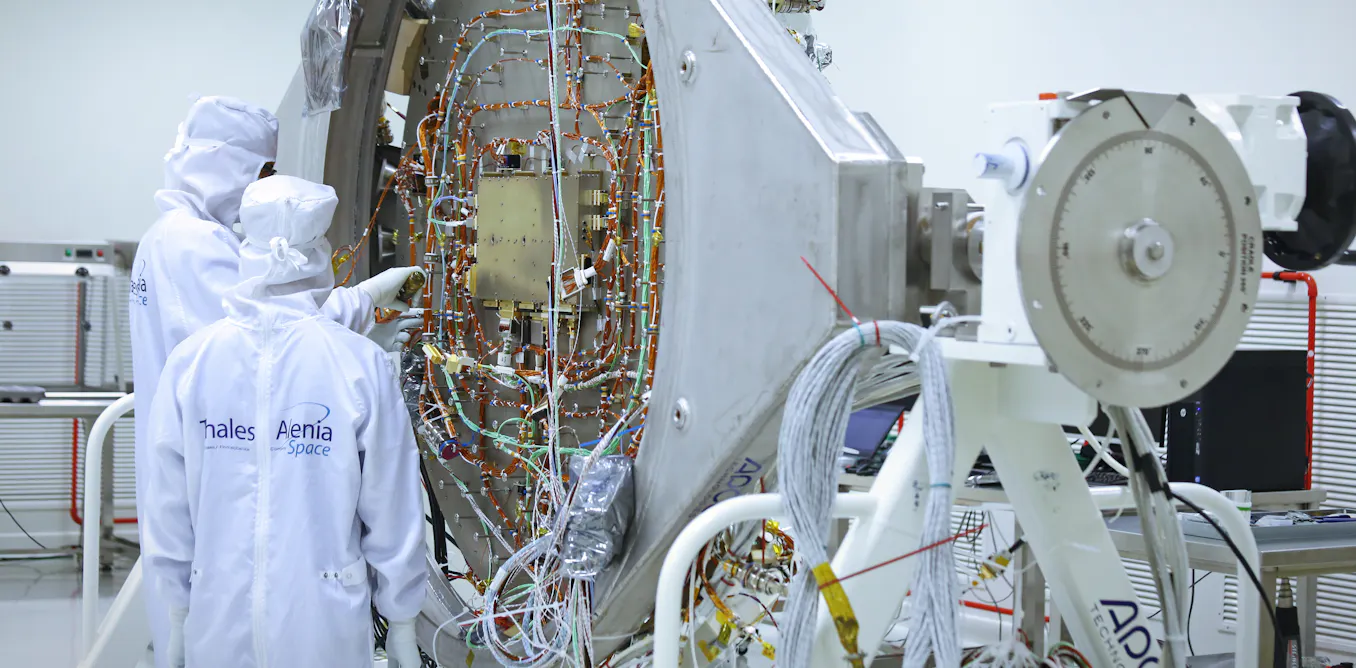
Industry consolidation provides one pathway forward. Major European aerospace companies including Airbus, Thales Alenia Space, and Leonardo SpA control significant contracts across multiple programs. These firms possess the technical capacity and financial leverage to drive integration. However, corporate interests sometimes conflict with public good objectives, requiring strong government coordination and clear contractual frameworks that mandate interoperability and data sharing.
Funding mechanisms present a structural obstacle. Galileo and Copernicus receive European Commission budgets. IRIS² draws from separate defense and telecommunications funds. Cleansky partners with industry through cost-sharing models. Aligning these financial streams requires political commitment at both EU and member-state levels, particularly from France, Germany, and Italy, which host major aerospace clusters.
The path forward demands several moves. First, establish unified technical standards across programs to enable data and system compatibility. Second, create joint program governance structures that institutionalize regular coordination between project managers. Third, consolidate overlapping research and development activities. Fourth, streamline procurement processes so that contracts reward companies demonstrating cross-program efficiency rather than single-program optimization.
European policymakers cannot ignore this challenge. The continent's space ambitions depend on treating Galileo, Copernicus, Cleansky, and IRIS² as components of an integrated European space strategy rather than independent initiatives. Without deliberate coordination, Europe risks falling further behind competitors who move faster and spend smarter.