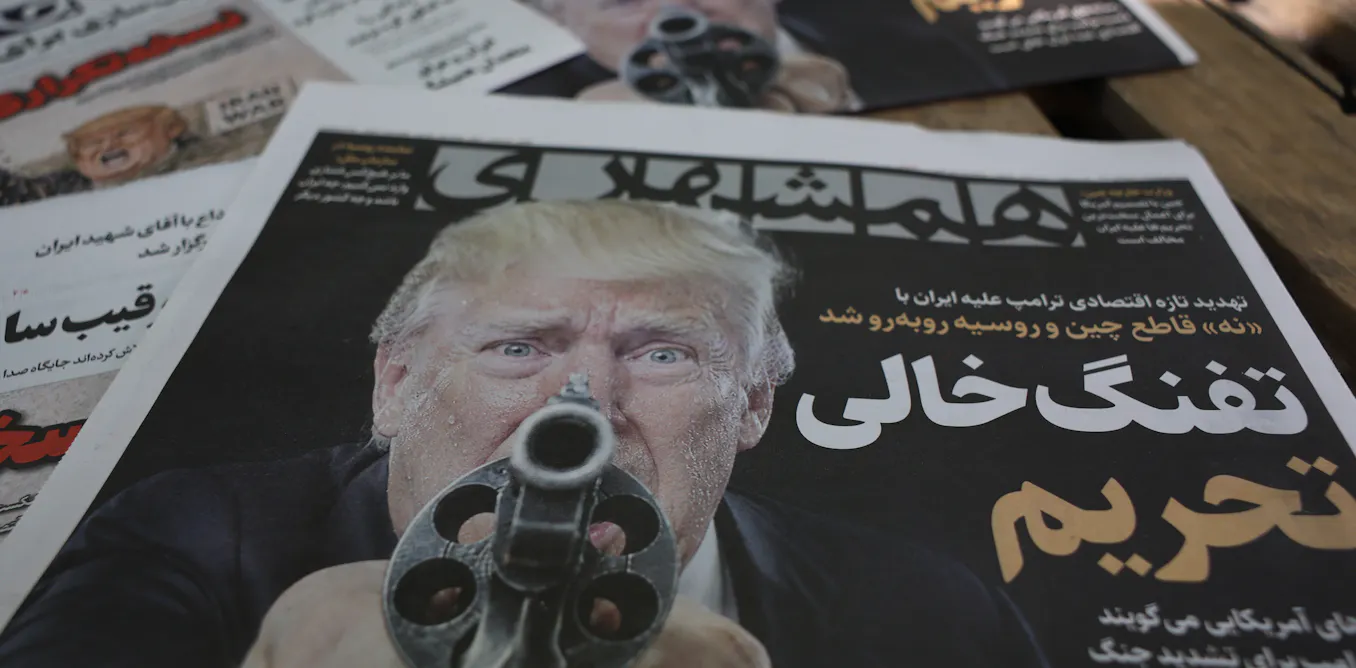
# Trump's Iran Strategy Hits Limits as Diplomatic Path Narrows
The Trump administration's approach to Iran relies on escalating pressure through sanctions and military threats, but these tactics have demonstrated minimal effectiveness in shifting Tehran's behavior, according to foreign policy analysts. The strategy assumes Iran will eventually capitulate under economic strain and security threats. Reality suggests otherwise.
Iran has endured decades of international sanctions. The country survived the maximum pressure campaign of Trump's first term, which included the withdrawal from the Joint Comprehensive Plan of Action (JCPOA) in 2018, reimposition of sanctions, and targeted killings of military leaders. Despite these pressures, Iran continued developing its nuclear program, expanded its regional military presence, and maintained support for proxy forces across the Middle East.
Economic strangulation has limits. While sanctions reduced Iran's oil exports and foreign revenue, they did not force regime change or policy reversal. Instead, sanctions hardened political positions within Iran. Supreme Leader Ayatollah Khamenei used external pressure to consolidate domestic control and rally nationalist sentiment against perceived American aggression. This pattern repeats across sanctioned states: external coercion often strengthens authoritarian governments by allowing them to blame foreign enemies for economic hardship.
Military posturing carries similar constraints. The Trump administration's threats of airstrikes and assassination operations create tactical uncertainty but have not deterred Iranian leaders from advancing their strategic objectives. Iran responded to the January 2020 killing of Revolutionary Guard commander Qasem Soleimani with ballistic missile attacks on American bases and continued its regional activities. Threats without follow-through lose credibility. Actual military strikes risk regional escalation that neither side truly wants.
The JCPOA, negotiated under the Obama administration with six world powers, represented the opposite approach. The agreement provided Iran sanctions relief in exchange for nuclear restrictions and international inspections. For roughly three years, Iran complied with terms. The deal offered Tehran a path to rejoin the global economy while constraining its nuclear ambitions.
Trump's withdrawal from the JCPOA eliminated this mechanism. Rebuilding trust now requires something neither the Trump administration nor Iran currently demonstrates: willingness to return to negotiation without preconditions.
The analysis points to a single viable pathway forward. Both sides must recognize that current tactics fail their own strategic objectives. Iran wants sanctions lifted and regional security guarantees. The Trump administration wants nuclear containment and reduced Iranian regional influence. Neither goal achieves itself through escalation.
Renewed negotiations require both parties to compromise. Iran would need to accept nuclear restrictions. The Trump administration would need to lift sanctions and provide security assurances. Neither side currently frames these positions publicly.
The alternatives become grim. Continued sanctions maintain the status quo while damaging global economics. Military escalation risks spreading conflict throughout the Middle East and disrupting energy markets. Neither outcome serves American interests or regional stability.
Diplomacy remains the only option that offers both sides tangible gains. The question remains whether political will exists to pursue it.