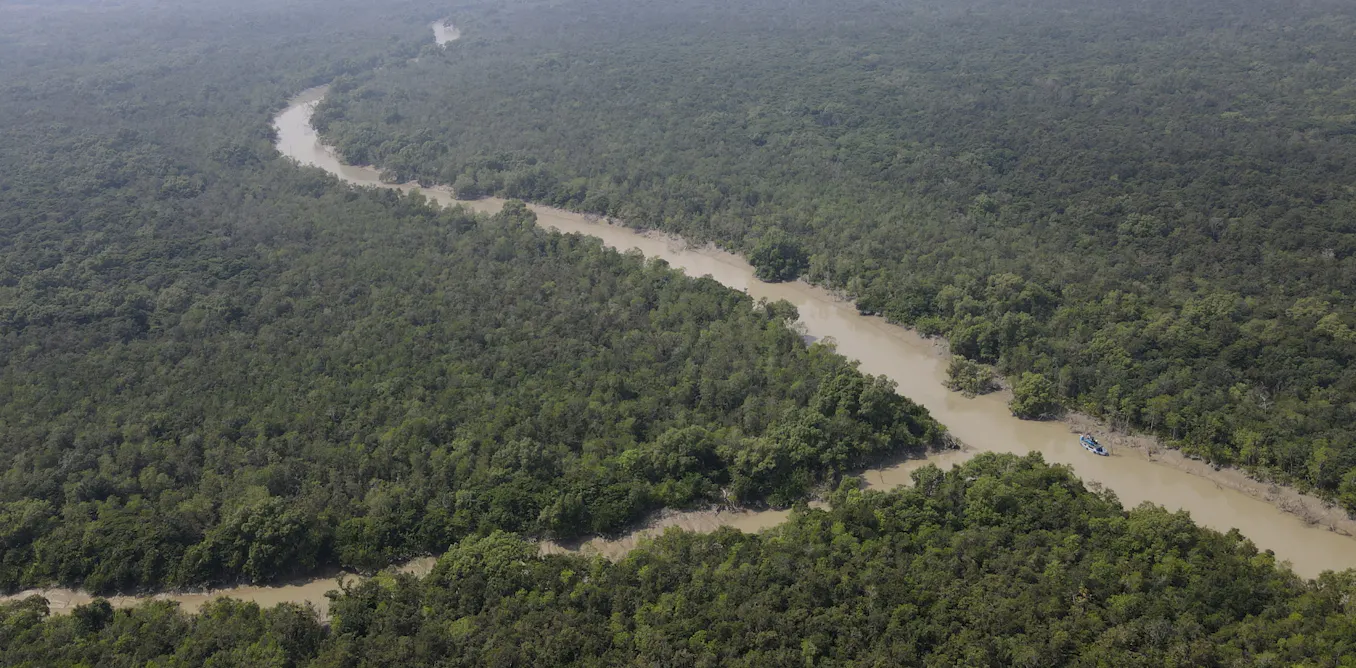
# Ecological Collapse in World's Largest Mangrove Forest Signals Broader Climate Crisis
The Sundarbans, the world's largest mangrove forest spanning Bangladesh and India, faces ecological collapse driven by climate change. The deterioration threatens not only the ecosystem itself but the survival of hundreds of thousands of people who depend on the forest for their livelihoods.
Mangrove forests serve as critical buffers against coastal storms, nurseries for fish and shrimp, and carbon sinks that help regulate global climate. The Sundarbans covers approximately 10,000 square kilometers across the Ganges Delta region. Its decline represents what climate researchers describe as an early warning sign of cascading environmental damage that will spread to coastal communities worldwide.
Rising sea levels, intensified cyclones, and saltwater intrusion into freshwater aquifers have made farming impossible in areas where families have worked land for generations. Farmers report crop failures and destroyed irrigation systems. Fishing communities face dwindling catches as warming waters and pollution degrade spawning grounds. The forest itself shows visible signs of stress. Tree density has decreased in certain zones, and invasive species now colonize areas where native mangroves once thrived.
The human cost runs deep. Families have abandoned villages. Workers displaced from agriculture and fishing find few alternative employment options. Young people leave for cities in search of work. Schools have lost enrollment as populations shift. Healthcare access deteriorates as rural communities shrink.
Bangladesh and India acknowledge the crisis but face competing pressures. Both nations balance climate adaptation with economic development. Infrastructure projects, shrimp farming operations, and industrial expansion have accelerated mangrove loss even before climate impacts accelerated. The Sundarbans region is home to approximately 4.9 million people in Bangladesh alone, with millions more in Indian communities nearby.
The forest also harbors the endangered Bengal tiger. Population estimates suggest fewer than 100 remain in the Sundarbans. Habitat loss pushes tigers into conflict with humans. Rising sea levels could eliminate tiger breeding grounds within decades.
Scientists studying the Sundarbans point to the region as a harbinger of climate impacts that will affect coastal areas globally. Low-lying island nations, river delta communities, and vulnerable coastal populations in Southeast Asia, Africa, and the Pacific face similar threats. Mangrove loss removes natural storm barriers and carbon storage capacity, accelerating climate change itself.
Adaptation efforts exist but remain underfunded. Bangladesh has launched mangrove restoration projects and developed climate resilience programs in coastal villages. India operates conservation zones within the forest. Both nations participate in international climate agreements that commit them to forest protection and emissions reduction. Yet implementation lags behind commitments. Local communities often lack resources to implement sustainable practices. International climate finance has not materialized at promised levels.
The Sundarbans ecological collapse is not inevitable but requires immediate action. Mangrove restoration, investment in sustainable livelihoods, and serious emissions reduction could slow or reverse current trends. The window for intervention remains open but narrowing. Communities that depend on the forest cannot wait for global consensus. They need resources and support now.