# Schools Face New Accessibility Compliance Requirements as ADA Deadline Approaches
Public schools across the United States are confronting updated accessibility requirements tied to the Americans with Disabilities Act. Recent regulatory updates have clarified what digital accessibility means for educational institutions, and districts now face concrete timelines for compliance.
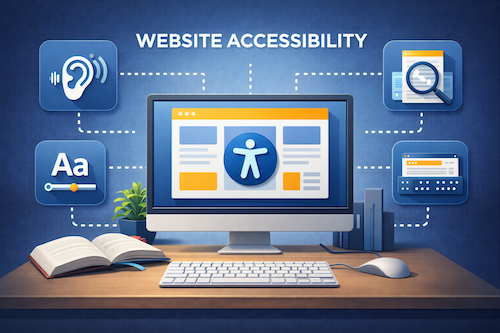
The changes center on ensuring that students, parents, and community members with disabilities can access school websites, online platforms, and digital content on equal terms with others. This includes making sure websites function properly with screen readers, providing captions for videos, ensuring documents are formatted accessibly, and guaranteeing that online learning platforms work with assistive technologies.
Schools have long operated under ADA obligations, but enforcement has intensified. The U.S. Department of Justice and the Department of Education's Office for Civil Rights have both signaled that they will pursue accessibility violations more aggressively. Districts that fail to meet accessibility standards risk federal investigations, consent decrees, and expensive remediation costs.
What does compliance actually require? Schools need to audit all digital properties, including district websites, student information portals, online gradebooks, learning management systems, and platforms used for remote instruction. The Web Content Accessibility Guidelines 2.1, Level AA standard has become the de facto benchmark that schools should meet. This framework addresses how to structure web pages, describe images, caption media, and design interfaces that work across different devices and assistive technologies.
Many districts lack the expertise to assess their own compliance. Larger systems have hired accessibility officers. Smaller districts often contract external auditors to identify gaps. Once problems emerge, fixes range from simple, like adding alt text to images, to complex, like redesigning entire platforms to meet accessibility standards.
Timeline matters. While no single federal deadline has been universally announced for all schools simultaneously, districts cannot delay. The Office for Civil Rights has been opening investigations based on parent and student complaints. Once a complaint lands, schools typically have 60 days to respond. Districts that have not addressed accessibility issues beforehand often find themselves in reactive mode, scrambling to fix problems while also defending their practices.
Training staff represents another critical component. Teachers and administrators need to understand how to create accessible documents, use learning management systems in accessible ways, and recognize when content fails to meet standards. Many districts have begun incorporating accessibility training into professional development cycles.
Vendors also bear responsibility. Schools purchase textbooks, testing platforms, software, and other educational tools. Contracts should now include accessibility requirements. Schools are increasingly asking vendors for accessibility compliance documentation and using audit results to drive purchasing decisions.
The financial impact varies. Simple fixes cost little. Overhauling entire platforms or websites can run into six figures. But districts also face the cost of not complying, including litigation expenses, settlement payments, and the burden of providing accommodations retroactively.
Districts that move proactively report better outcomes. Schools that conducted full audits, established accessibility policies, trained staff, and allocated budget for remediation have faced fewer complaints and smoother implementation. Those that delayed typically face crisis management and higher costs.
The broader principle underlying these requirements remains straightforward. Students with disabilities have the same right to educational access as students without disabilities. Digital tools are now central to learning. Making those tools accessible is not optional.