# Dolly Parton's Career Strategy: Humor as a Tool for Professional Control
Dolly Parton built one of entertainment's most enduring careers by weaponizing humor against sexism. Rather than accept or ignore the assumptions men made about her appearance, her intelligence, and her place in country music, Parton turned those stereotypes into comedic material she controlled entirely.
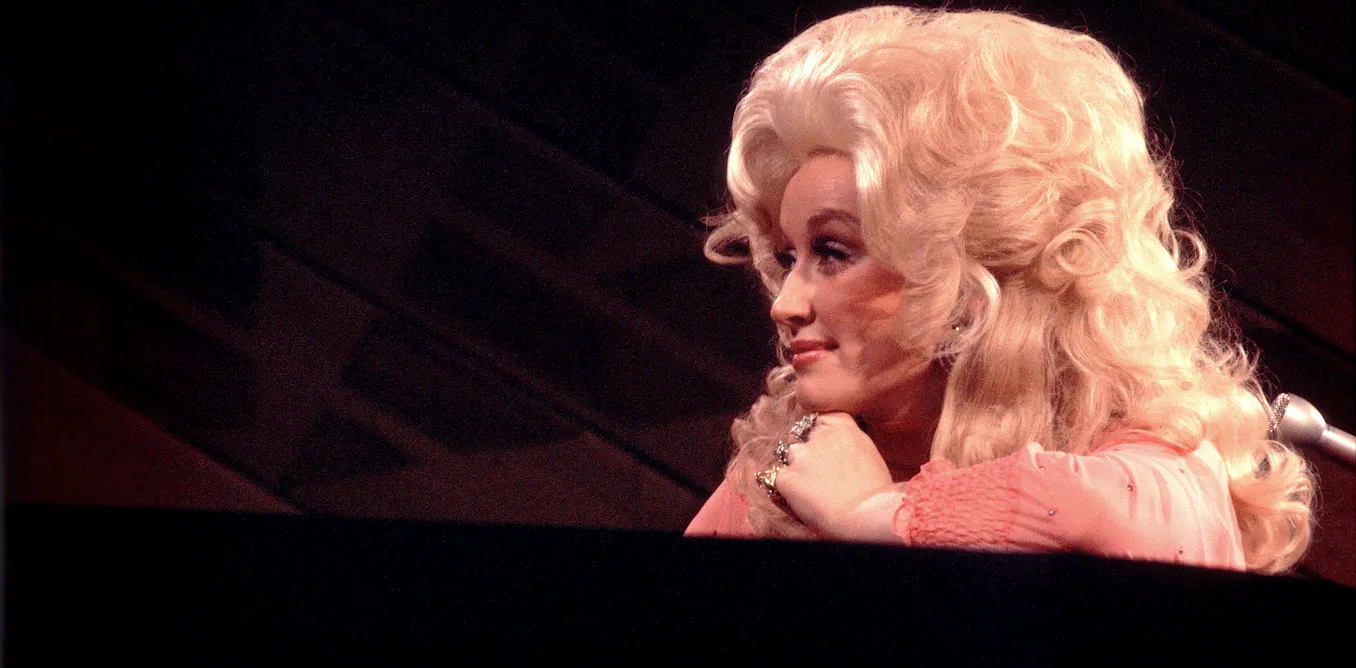
This approach proved revolutionary in an industry that historically silenced women or pushed them into narrow roles. When male colleagues and audiences made assumptions about her based on her platinum blonde hair, rhinestone-studded outfits, and curvaceous figure, Parton beat them to the punch. She made jokes about her appearance first. She joked about her cosmetic surgery, her wigs, her glamorous presentation. By delivering the punchlines herself, she reclaimed the narrative and positioned herself as the author of her own image rather than its victim.
The strategy worked across multiple platforms. In interviews, on stage, and in duets with male artists, Parton deployed self-deprecating humor that was anything but self-diminishing. When she collaborated with artists like Kenny Rogers or performed with male musicians, she could ad-lib her way through a song with comedic timing that kept audiences laughing while she maintained her authority over the performance. She wasn't the butt of the joke in the traditional sense. She was the person telling it.
This matters beyond entertainment history. Parton's approach demonstrated a pathway for women in male-dominated fields to claim space and authority. She didn't wait for permission or acceptance from gatekeepers. She didn't let others define her worth based on conventional standards of femininity or professionalism. Instead, she leveraged her awareness of how people perceived her and turned that perception into a source of power.
Country music in particular operated under strict conventions about how women should present themselves and what roles they should occupy. Radio programmers, record label executives, and male artists held significant power over women's careers and visibility. Parton's humor created distance between her public persona and the assumptions people brought to that persona. It allowed her to be taken seriously as a songwriter, musician, and businesswoman while remaining instantly recognizable and beloved.
The economic payoff validated the strategy. Parton became one of the most successful recording artists in history. She wrote hit songs. She built a business empire that included theme parks, production companies, and philanthropic ventures. She earned induction into the Country Music Hall of Fame and the Songwriters Hall of Fame. Her music reached audiences across genres and generations.
Parton's career offers a case study in how marginalized people can navigate hostile or limiting environments through strategic use of humor and self-presentation. She didn't dismantle sexism in country music. Structural problems in the industry persist. But she created space for herself within those constraints by controlling the narrative about her own image and by refusing to let other people's assumptions limit her ambitions or her reach.
The Parton model demonstrates that humor deployed strategically can function as a form of resistance and self-determination. It can protect your authority while maintaining your accessibility. It can let you be seen while maintaining control over how you are seen. In an industry built on image and performance, Parton transformed that reality into her greatest advantage.