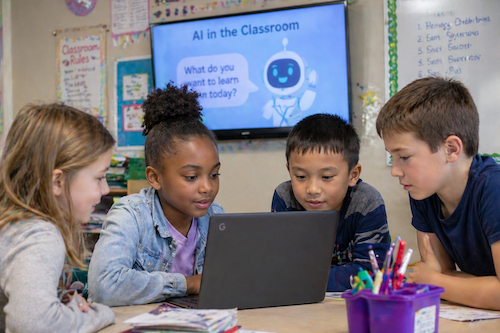
# When AI means something different in every classroom
Schools across the country are adopting artificial intelligence tools without consistent policies, leaving individual teachers to decide how and when to deploy the technology. This fragmented approach creates a patchwork of AI use that varies dramatically from classroom to classroom, even within the same school building.
The lack of centralized guidance stems partly from the speed at which AI has entered education. Districts have struggled to develop comprehensive policies while teachers face immediate decisions about using ChatGPT, automated grading systems, personalized learning platforms, and other AI applications. The result: one teacher might use an AI writing assistant to help students revise essays, while a colleague down the hall bans the same tool entirely.
This inconsistency poses real problems for students and educators. Students receive conflicting messages about what constitutes academic integrity when AI use is permitted in one class but prohibited in another. Teachers without formal training in AI capabilities and limitations may deploy these tools ineffectively or miss potential harms. Parents struggle to understand what their children encounter in school technology.
The variation also reflects deeper questions that schools have not yet resolved collectively. Districts must answer: What is AI for in our schools? Is it a productivity tool, a tutoring system, an assessment aid, or something else? Should AI handle routine tasks like attendance tracking and grade calculation, or should human judgment remain paramount in these areas? How do we prevent AI from amplifying existing achievement gaps between affluent and under-resourced schools?
Some districts have begun establishing AI governance frameworks. These typically involve cross-functional teams of teachers, administrators, technology specialists, and sometimes parents and students. Effective policies distinguish between different AI applications and their appropriate uses. A tool designed for data analysis serves a different function than one intended to generate student writing, and each warrants different guardrails.
Training matters enormously. Teachers using AI effectively know what the technology actually does, what it cannot do, and where it fails. Schools that invest in professional development see more thoughtful implementation than those expecting teachers to figure out AI on their own.
The stakes extend beyond individual classrooms. How schools use AI now establishes precedents for student expectations about technology, work, and learning. Students who graduate from a school where AI use was thoughtfully governed have different preparation than those from schools where it was chaotic or absent.
Several organizations have released AI governance guides for K-12 schools, including resources from the International Society for Technology in Education and various state departments of education. These frameworks generally recommend starting with clear definitions of acceptable use, establishing transparency about where AI operates in school systems, ensuring human oversight remains in place for high-stakes decisions, and regularly reviewing policies as technology evolves.
The challenge ahead requires districts to move beyond ad-hoc adoption. Schools need deliberate conversations about educational values, aligned implementation, and ongoing assessment of whether AI serves students well. Without this work, the gap between what happens in different classrooms will only widen.