# The Hidden Cost of Fragmented Student Data in K-12 Schools
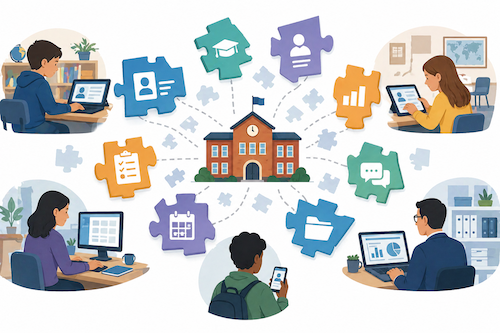
Student information in American K-12 schools lives in fragments across incompatible systems. A student's attendance record sits in one database. Test scores reside in another. Disciplinary incidents exist in a third. Special education records occupy a fourth. This fractured landscape costs schools time, money, and—most importantly—the ability to help individual students succeed.
The problem runs deep. Most school districts operate with legacy student information systems (SIS) that don't communicate with each other. A teacher cannot quickly access a complete picture of a student's academic history, behavioral patterns, and support needs. Counselors waste hours manually pulling records from different platforms. Administrators duplicate data entry across systems, introducing errors and inconsistencies.
When data fragments, schools lose visibility. A student struggling in math might also be missing classes frequently and acting out in the cafeteria. These patterns matter. They tell educators something is wrong. But when data lives separately, no one connects the dots. Teachers see isolated incidents rather than warning signs.
The operational toll is substantial. School staff spend administrative time that should go toward instruction instead managing data duplication and reconciliation. IT departments maintain multiple systems rather than investing in modern infrastructure. Some schools estimate their teams spend 20-30 percent of each week on data management tasks that technology should handle automatically.
Data fragmentation also breaks the school-home connection. Parents receive separate progress reports from different teachers, platforms, and grade-book systems. A parent might learn from one teacher that their child is excelling but from another that attendance is declining. Inconsistent information creates confusion and erodes parent-teacher partnerships at the moment when alignment matters most.
Special education and English learner services suffer particularly. Students with individualized education programs (IEPs) require coordinated support across multiple staff members. When data fragments, crucial accommodations get missed. Related services records don't sync with classroom assessments. Progress monitoring becomes unreliable. These gaps directly undermine the legal and educational protections these students deserve.
Financial impact extends beyond staff time. Schools purchase multiple systems to fill gaps created by incompatible primary platforms. A district might buy separate applications for attendance, gradebooks, behavior tracking, special education management, and parent communication. Each system requires licensing fees, technical support, and staff training. The cumulative cost diverts resources from classrooms.
Data security risks compound the problem. Information stored across multiple systems increases breach surface area. When student data fragments, ensuring compliance with FERPA requirements and state privacy laws becomes exponentially harder. Auditing access, tracking who views what information, and responding to breaches all become more difficult and expensive.
Forward progress requires integration. Districts increasingly recognize that unified student data platforms eliminate fragmentation at the source. Modern cloud-based systems consolidate attendance, grades, assessments, behavior, and special education records into single accessible repositories. When implemented thoughtfully, these platforms provide teachers instant access to the full student picture and give parents consistent, real-time insight into their child's progress.
The shift demands change management. Teachers and administrators need training. Districts must address legitimate data governance concerns about who accesses what information. Privacy and security protocols require careful design. But the return on investment is clear: better data literacy among staff, faster identification of struggling students, stronger parent engagement, and ultimately improved outcomes.
Schools continuing to operate fragmented systems accept unnecessary costs and missed opportunities to serve students well.