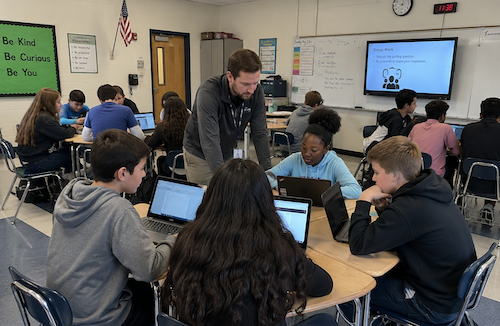
# AI Tools Free Up Teacher Time From Grading, Redirecting Focus to Classroom Instruction
Teachers spend roughly 10 to 20 percent of their workweek on assessment and grading tasks. That administrative burden pulls educators away from lesson planning, student feedback, and one-on-one instruction where they add the most value. Artificial intelligence platforms now offer a way to compress that timeline.
Several AI assessment tools handle the routine mechanics of grading multiple-choice tests, short-answer responses, and homework submissions. The software flags patterns in student performance, identifies knowledge gaps, and generates progress reports that teachers can review in minutes rather than hours. Teachers then use this data snapshot to make teaching decisions rather than spending evenings with stacks of papers.
The benefit is real. When grading takes less time, teachers redirect that energy toward deeper instruction. A teacher might use AI-generated class performance data to restructure a lesson plan, create targeted small-group instruction for struggling learners, or design enrichment activities for advanced students. The technology becomes a lever for better teaching, not a replacement for it.
The concern about AI overreliance remains legitimate. Some schools have experimented with AI-generated lesson content, AI chatbots as tutors, or algorithmic systems that make placement decisions about students. These applications raise valid questions. Can an algorithm understand why a student gave a wrong answer. Does it recognize effort, partial understanding, or learning trajectory. Can it replace the teacher's professional judgment about a learner's readiness.
Education leaders and vendors now emphasize a clear boundary. AI should handle the transactional parts of teaching. Grading, data aggregation, and performance reporting are tasks where machines excel and where accuracy matters but human creativity does not. The pedagogical decisions, the relationship-building, the adaptive real-time instruction, and the moral authority to motivate and guide students remain the teacher's domain.
Schools implementing AI assessment tools report measurable shifts in how teachers spend time. One district using an AI grading platform found teachers regained approximately three hours per week. Rather than working through student papers at night, educators reviewed AI-generated performance summaries during planning periods and adjusted instruction the next day. Students got faster feedback on assignments because the technology provided immediate scoring and diagnostic information.
The practical implementation matters. Teachers need training to interpret AI output and confidence that the tool is accurate. A platform that misclassifies student performance erodes trust fast. Schools also must design clear policies about when AI assessment is appropriate. A standardized quiz with one correct answer suits automated grading. An essay on a controversial topic, a creative project, or a discussion response still requires human judgment.
The strongest version of this approach treats AI as an administrative assistant, not an instructional decision-maker. The technology processes data and surfaces insights. The teacher interprets those insights, decides what they mean for individual students, and designs next steps. This division of labor respects both what machines do well and what teachers bring to education that technology cannot replicate.
Districts considering these tools should pilot them with clear metrics. Does teacher workload actually decrease. Does instructional time increase. Do students receive better feedback faster. Does the quality of teaching decisions improve. The answers to these questions determine whether the technology serves its intended purpose or simply adds another layer of complexity to an already demanding job.