# District's Homegrown STEM Series Becomes Unexpected YouTube Phenomenon
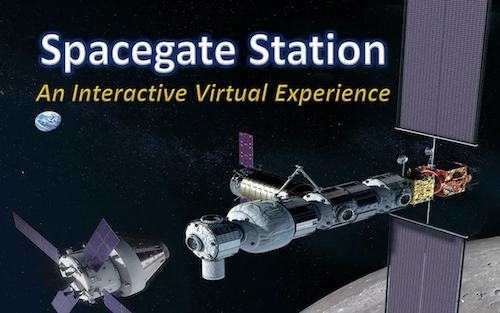
Duval County Public Schools (DCPS) in Jacksonville, Florida created Spacegate Station in 2022 as an internal teaching tool. The fictional space station concept was designed to support daily STEM instruction in classrooms. The series has since evolved into something the district did not anticipate: a viral educational hit on YouTube with growing viewership reaching far beyond district boundaries.
The premise is straightforward. Students follow characters and storylines aboard a space station orbiting the moon. These narratives embed physics, engineering, mathematics, and science concepts into entertainment. Rather than traditional lecture formats, Spacegate Station wraps STEM content inside a narrative framework that holds viewer attention.
What started as instructional media for Duval County classrooms now attracts sustained engagement from YouTube audiences worldwide. The channel has grown organically, suggesting that the district struck a balance between entertainment and education that resonates with viewers outside traditional school settings. This raises questions about how districts can leverage content created for internal use into broader educational resources.
The success matters for several reasons. First, it demonstrates that classroom-grade STEM content can compete in open digital spaces dominated by entertainment platforms. Teachers and districts often struggle to find engaging materials that meet curriculum standards while keeping students interested. Spacegate Station proves that thoughtfully designed fictional frameworks can achieve both goals.
Second, the YouTube channel creates free educational access. Students without robust district resources or after-school STEM programs can now watch the series independently. Parents seeking supplementary science content have a vetted option. Homeschooling families and adult learners exploring STEM topics have another resource.
Third, the model offers a template for other districts. DCPS invested in creating instructional media. That investment now serves multiple audiences and extends the district's reach in education. Other school systems may recognize similar opportunities to develop content with dual purposes: classroom instruction and public engagement.
The growth also reflects broader trends in educational media. Platforms like YouTube have become discovery engines for learning content. Traditional textbooks and worksheets compete increasingly with video-based instruction. Students expect multimedia, narrative-driven learning experiences. Districts that produce polished, engaging video content have advantages in student motivation and retention.
DCPS has not released specific viewership metrics, but the characterization of Spacegate Station as a "growing YouTube hit" and "success story" suggests sustained momentum. The channel appears to maintain regular uploads and audience interaction typical of successful educational channels.
The unexpected nature of the success carries an important lesson. Districts often view instructional media as internal products. Spacegate Station suggests that quality educational content, when freely distributed on accessible platforms, can find audiences that extend far beyond original intent. This opens possibilities for districts to think of content creation not just as a classroom tool, but as a community and global educational asset.
As DCPS continues producing Spacegate Station, the district faces decisions about scaling, licensing, and cross-platform distribution. Other educators and parents have already found value in the series. How the district manages this growth while maintaining educational quality will determine whether Spacegate Station remains a local success or becomes a model for district-created educational media reaching national audiences.