# Teachers Push Back on AI Feedback as Schools Expand Automated Grading
Teachers across the country are raising concerns about the growing use of artificial intelligence to provide student feedback, arguing that algorithms cannot replace the personal connection that drives learning. The debate centers on whether AI-generated comments and assessments can match the value of direct communication between teachers and students.
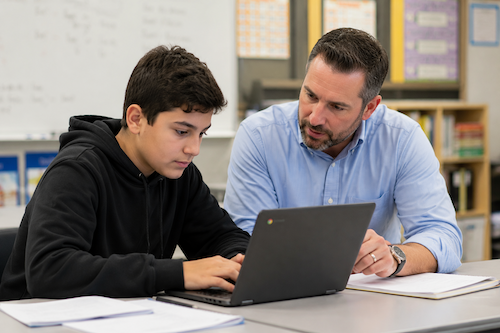
One educator's recent experience crystallized the tension. During end-of-year conferences, a teacher discovered that a student named Steven had barely started his final project. The conversation revealed deeper issues: confusion about assignment expectations, anxiety about the work, and disconnection from the material. A teacher could address these concerns through dialogue. An AI system could not.
This dynamic reflects a broader shift in education technology. Schools nationwide have begun adopting AI tools designed to automate feedback on assignments, reducing teacher workload and providing instant responses to student submissions. Vendors market these systems as efficiency solutions that free teachers from grading and allow them to spend more time on instruction. Some platforms use natural language processing to analyze student work and generate customized comments within seconds.
The appeal is clear. Teachers report spending 10 to 20 hours weekly on grading alone. Administrative demands continue to rise. Technology that cuts this burden offers real practical relief.
But educators like Steven's teacher worry about what is lost in the exchange. Feedback that matters does more than identify errors. It communicates to students that someone knows their work, understands their thinking, and believes in their potential. It creates space for follow-up questions and adjustments based on individual circumstances. A student struggling with an essay assignment might need reassurance, clarification of the rubric, or a conversation about how to approach revision. An AI comment cannot sense hesitation or adjust based on a student's emotional state.
The research on feedback effectiveness supports this concern. Studies consistently show that feedback improves student learning when it is specific, timely, and part of an ongoing dialogue. The most effective feedback often includes elements that algorithms struggle to deliver: recognition of effort and progress, acknowledgment of misconceptions, and guidance tailored to a student's prior performance and learning goals. Generic automated feedback, even when technically accurate, fails to create the sense of being seen and understood that motivates deeper engagement.
Schools implementing AI feedback systems often frame them as supplements rather than replacements for teacher commentary. But in practice, workload pressures can shift incentives. If a teacher receives an AI-generated summary of student performance and feels permission to move forward without adding personal reflection, that boundary blurs. Students receive feedback, but not feedback rooted in relationship.
The question facing educators is not whether technology should help with grading logistics. It should. The question is whether schools will preserve space for the human work of assessment. Responding to student writing, understanding what misconceptions underlie an error, recognizing when a student is ready for challenge versus support. These acts require presence and judgment.
Steven's teacher recognized something in that conference that no algorithm flagged: a student who needed connection as much as correction. That recognition came from knowing the student, noticing patterns in his work, and being willing to ask questions that went beyond the assignment itself. Teaching at its best is relational work. The tools schools choose should honor that reality rather than work around it.