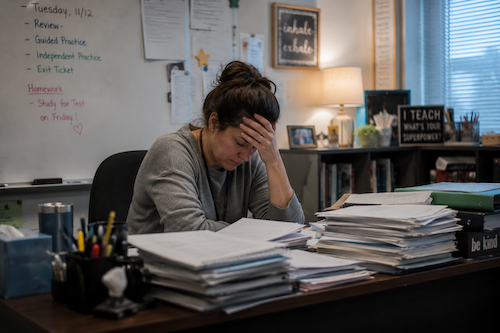
Teacher stress has reached alarming levels despite modest declines in 2026. American teachers report stress levels and well-being outcomes far worse than comparable professionals in other fields, according to recent data.
The gap between teacher stress and stress experienced by other working adults has widened. Teachers continue to face burnout at rates that outpace their counterparts in similar-wage professions. While 2026 saw a slight improvement from previous years, the baseline remains elevated. Teachers are substantially more likely to report high stress, lower job satisfaction, and deteriorating mental health compared to adults in similar economic circumstances.
The stress teachers face stems from multiple sources. Classroom management challenges, curriculum demands, and pressure to raise test scores remain persistent. Beyond academic expectations, teachers navigate political pressures over curriculum content and classroom instruction. Many districts have seen reduced administrative support and increased class sizes. Teachers also contend with inadequate resources for students with behavioral or learning needs.
Financial strain compounds the problem. Teachers report lower compensation relative to their education level compared to other college-educated professionals. Many work second jobs to supplement income. Out-of-pocket spending on classroom supplies, materials, and student needs drains already modest paychecks. This financial pressure forces difficult choices between personal stability and classroom effectiveness.
The 2026 data suggesting modest stress decline warrants scrutiny. Some researchers attribute the improvement to teachers who left the profession, creating a survivor bias. Those remaining in classrooms may represent teachers with higher stress tolerance or fewer alternatives. Meanwhile, districts report ongoing teacher shortages and difficulty recruiting qualified candidates, particularly in high-poverty schools and STEM subjects.
Burnout carries concrete costs. When teachers leave the profession prematurely, schools lose institutional knowledge and experience. Classroom continuity suffers as substitute teachers fill gaps. Students experience disrupted relationships with educators. Districts spend resources on recruitment and training for replacement teachers. Research shows teacher turnover negatively affects student achievement, with effects most pronounced in low-income communities.
Some districts have implemented retention strategies. Higher starting salaries, loan forgiveness programs, and improved health benefits attempt to address financial stress. Others offer professional development, mentorship programs, and reduced administrative burdens. A few states have increased education funding to support competitive wages and classroom resources.
The teaching workforce itself has changed. Younger teachers report different priorities than previous generations. They seek work-life balance, transparent career pathways, and meaningful input on school policies. Many reject traditional notions of teaching as a calling that requires personal sacrifice. This generational shift reflects broader changes in the American workforce and heightened awareness of mental health.
Federal and state policymakers face pressure to act. Some propose increasing teacher salaries nationwide to match other professions requiring similar education. Others advocate for reduced testing requirements and greater teacher autonomy in instructional decisions. Mental health resources, including counseling services and peer support programs, have expanded in some districts.
The 2026 stress data alone cannot determine whether conditions are improving. Long-term trends matter more than single-year fluctuations. Districts that maintain current policies likely face continued turnover. Those investing substantially in teacher well-being report better retention and staff morale. As student enrollment patterns shift and retirement waves reshape the workforce, the teaching profession's ability to attract and retain talented educators remains uncertain.