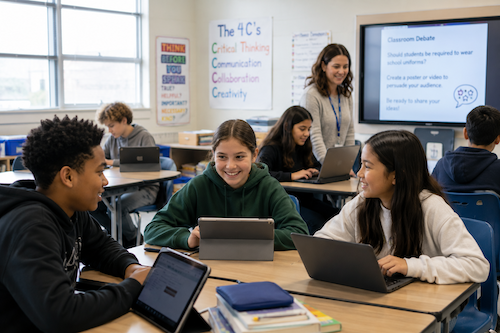
# Positive Classroom Culture Remains Essential Foundation for Learning
Teachers entering the 2024-25 school year face the usual pressures: lesson planning, curriculum standards, standardized test preparation. But research and practitioner experience point to something more foundational than any of these. Classroom culture—the daily tone, relationships, and behavioral expectations established between teachers and students—drives academic outcomes more directly than many traditional metrics suggest.
Classroom culture operates as an umbrella concept encompassing student-teacher relationships, peer interactions, classroom norms, and the physical environment itself. When students feel respected, valued, and safe, they engage more deeply with academic content. When they feel disconnected or anxious, learning stalls regardless of curriculum quality.
The evidence base for this principle runs deep. Research from institutions like the University of Virginia and Harvard Graduate School of Education shows that schools and classrooms with strong relational climates report higher achievement gains, better attendance, and fewer disciplinary incidents. Students in positive environments take more academic risks—they ask questions, attempt challenging work, and persist through failure. This behavior is the opposite of what happens in stressful or chaotic classrooms, where students disengage as a protective mechanism.
Creating positive classroom culture requires intentionality. A single back-to-school ice breaker or a posted poster of classroom rules does not build culture. Instead, educators establish it through thousands of daily interactions. These include listening actively to student concerns, greeting students at the door by name, acknowledging effort and growth rather than just performance, establishing consistent and fair routines, and responding to misbehavior through restorative rather than purely punitive approaches.
Teachers often underestimate how much students notice and remember these small moments. A teacher's genuine interest in a student's weekend, acknowledgment of a student's struggle with confidence, or flexibility when a student faces a personal challenge communicates that the teacher sees the student as a person, not just a learner to be measured.
Building culture also means addressing bias and creating inclusive spaces. Students from marginalized communities—students of color, students with disabilities, LGBTQ students, low-income students—report feeling less safe in schools with weak relational cultures. When teachers actively work to dismantle stereotypes, center diverse voices in curriculum, and ensure equitable access to advanced work, they build culture that serves all learners.
For teachers stretched thin by administrative demands, adding culture-building to an already full plate can feel impossible. Yet research suggests that time invested in culture reduces time spent on classroom management and reteaching concepts students missed due to disengagement. Schools that prioritize culture report lower burnout rates among teachers and higher job satisfaction.
The timing of culture-building matters most in the first weeks and months of school. Teachers who spend August and September establishing routines, learning students' names and stories, and setting behavioral and academic expectations see those investments pay dividends throughout the year. Schools that provide professional development on trauma-informed practices, restorative justice, social-emotional learning, and culturally responsive teaching equip teachers with concrete strategies for building strong culture.
As educators plan the coming year, classroom culture deserves a place at the top of the priority list alongside lesson planning and standards alignment. The foundation students need for success rests not on activities or materials alone, but on the relationships and trust built one interaction at a time.