# Teaching Listening Skills Emerges as Critical Back-to-School Priority
Schools across the United States face a growing challenge as students return to classrooms this fall: many learners lack fundamental listening skills that teachers depend on for effective instruction.
The issue extends beyond simple attention span problems. Students struggle to remain mentally present during lessons, organize information they hear, and formulate meaningful questions based on classroom discussion. These deficits compound existing learning gaps widened by pandemic disruptions and increased screen time among young people.
Educators report that listening proficiency directly affects academic performance across all subjects. A student who cannot process verbal instructions in math class falls behind on problem-solving sequences. A reader who cannot listen to peer feedback during writing workshops misses opportunities to revise and improve. Science students who miss spoken explanations of experimental procedures struggle to complete labs safely and accurately.
The problem manifests differently across grade levels. Elementary teachers notice students interrupting constantly, unable to wait their turn or track multi-step directions. Middle school instructors find that note-taking suffers when students cannot distinguish between main ideas and supporting details delivered verbally. High school teachers watch as students miss nuance in discussions about literature, history, and complex concepts because they never learned to listen actively.
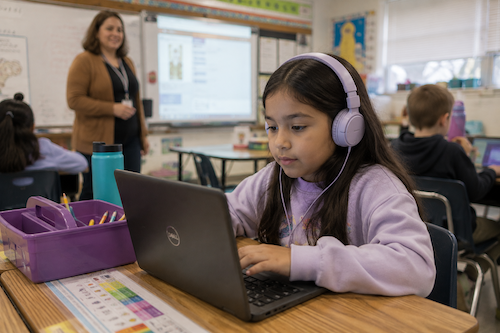
Teaching listening gives students practical tools they can use to remain mentally present, organize information, and ask meaningful questions. Structured listening activities build these competencies systematically. Teachers who incorporate daily listening practice report improvements in classroom behavior, academic engagement, and peer relationships.
Several schools have begun implementing dedicated listening curricula. These programs teach students specific strategies: note-taking frameworks, visualization techniques to track narratives, methods for distinguishing speakers' main points from examples, and protocols for formative listening that supports learning rather than passive hearing.
Parents can support this work at home. Family dinner conversations where each person shares without interruption build listening habits. Reading aloud together and discussing what characters said and why strengthens comprehension of spoken language. Asking children to summarize what they heard during the day, rather than simply asking "how was school," creates accountability for active listening.
The back-to-school challenge differs from traditional supply lists. Pencils and notebooks matter less if students cannot absorb instruction delivered through them. Classroom schedules become less useful if students miss half their teachers' explanations. Schools that address listening skills early in the year report smoother transitions, stronger student-teacher relationships, and better long-term academic outcomes.
Administrators and teachers increasingly recognize that listening fluency functions as a foundational literacy skill, equivalent to reading and writing. Students who listen well learn better across every subject. They participate more fully in discussions, complete assignments more accurately, and experience greater academic confidence.
As families prepare for the school year, adding "develop listening skills" to the back-to-school checklist makes practical sense. Schools that make this a priority set students up for success from day one.