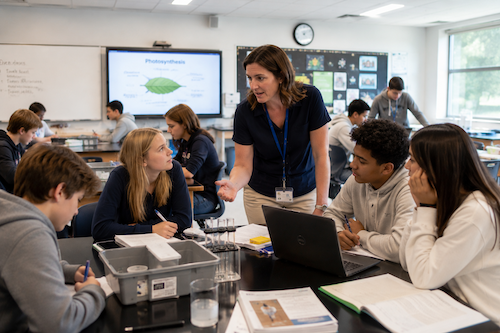
District leaders operate under intense pressure to boost science achievement scores, often within single school years. Yet research reveals a fundamental mismatch between how schools measure success and how students actually learn science. Real science competency develops over multiple years through sustained instruction, hands-on practice, and cumulative conceptual growth.
Current accountability systems push administrators to chase yearly test gains. Standardized assessments capture snapshots of student performance at specific moments, not trajectories of understanding. When schools prioritize immediate achievement metrics, they frequently shortcut the foundation-building that precedes breakthrough performance. Students master individual concepts before they integrate complex reasoning skills. That integration takes time.
The pressure intensifies because science education faces real challenges. Many districts struggle with staffing qualified science teachers. STEM teacher shortages hit rural and low-income districts hardest. Professional development budgets shrink while expectations for student performance climb. Administrators juggle competing demands: test scores, teacher retention, curriculum alignment, and resource constraints.
This creates a trap. Leaders who focus exclusively on next year's test results may implement quick-fix interventions that produce temporary gains without building lasting science literacy. Intensive test prep drills might lift scores briefly. But students who memorize facts for assessments without understanding underlying principles forget what they learned once the test ends. They enter high school unprepared for more advanced science courses.
Long-term science achievement requires different approaches. Students need sustained exposure to scientific practices, not just content. They should conduct investigations, make predictions, analyze data, and revise thinking based on evidence. These practices compound over years. A student who learns the scientific method in fifth grade builds on that foundation in seventh and ninth grades, developing deeper reasoning each time.
Multi-year planning matters. Districts that map science learning progressions across elementary and secondary grades see better outcomes. Teachers understand how concepts introduced in earlier grades connect to later, more complex applications. Eighth graders studying cell division have stronger preparation if they spent time on basic cell structure in sixth grade. Coherence across grades produces durability.
Teacher quality drives this work. Professional development focused on deepening teachers' own science knowledge pays dividends across multiple years. When teachers understand the reasoning behind scientific concepts, not just procedures for teaching them, they design better instruction. That instruction sticks with students longer.
The accountability conversation needs reframing. Single-year achievement targets miss the reality of human learning. Districts serve students for thirteen years. Science learning compounds like interest in a bank account. Small gains accumulate. Early investments in foundational understanding generate returns years later, when students tackle advanced courses, standardized exams, or science careers.
Leaders should track progress over multiple-year windows. Did students who received intensive science instruction in elementary school perform better in middle school science? Did girls exposed to engineering projects early maintain or increase science interest through high school? These questions reveal whether interventions actually work long-term.
The timing question cuts deeper too. Some science topics cluster better in certain grades. Ecology makes sense in ninth grade for most students, but some districts force it into sixth grade to match test calendars, not cognitive readiness. Flexibility around pacing lets instruction match student development.
Districts that want real science achievement invest in three-to-five-year improvement plans, not annual score chasing. They hire strong teachers and keep them. They build coherent curricula. They measure whether students actually retain and apply learning, not just whether they pass single tests. Science achievement is not a one-year event. It is the cumulative result of sustained, thoughtful instruction over many years.