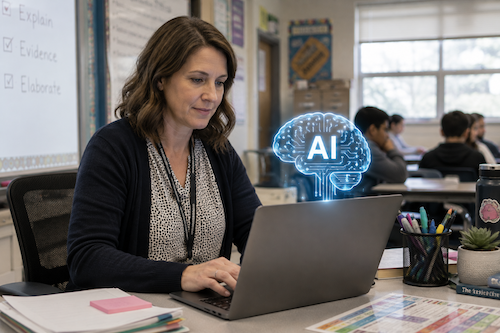
The conversation around AI in education has shifted from whether teachers should use it to how they can use it effectively. Educators increasingly view artificial intelligence as a tool to enhance instruction rather than replace it.
Teachers now explore AI across multiple classroom functions. The technology streamlines administrative work, freeing time for direct student interaction. Lesson planning accelerates when teachers use AI to generate initial frameworks, which they then customize to their specific students' needs. Assessment becomes more efficient through AI-assisted grading and feedback generation, though teachers retain the judgment call on final grades.
Personalized learning represents another application. AI systems analyze student performance data and adapt content difficulty in real time, helping struggling students catch up while keeping advanced learners challenged. This targets instruction to individual pace and style without requiring teachers to manually create multiple versions of every lesson.
Differentiated instruction also benefits from AI support. Teachers use these tools to generate reading materials at varying complexity levels, create alternative explanations of concepts, and develop practice problems tailored to specific learning gaps. The teacher remains the curator, selecting which AI-generated materials fit their classroom context.
Professional development has evolved too. AI tutors and virtual assistants help teachers explore new pedagogical approaches, troubleshoot classroom challenges, and access research-based strategies quickly. Some districts have integrated AI-powered platforms that connect teachers to curated professional learning resources.
However, thoughtful implementation remains essential. Teachers must verify accuracy in AI-generated content, maintain academic integrity standards, and ensure the technology serves equity rather than widening gaps. Privacy and data security require attention when selecting AI tools.
The current consensus among education leaders emphasizes responsible adoption. Teachers who pilot AI tools carefully, maintain transparency with students and families about their use, and regularly assess impact tend to see the strongest results. The focus has shifted from novelty to practical classroom value.