# What Is A One-to-One Classroom?
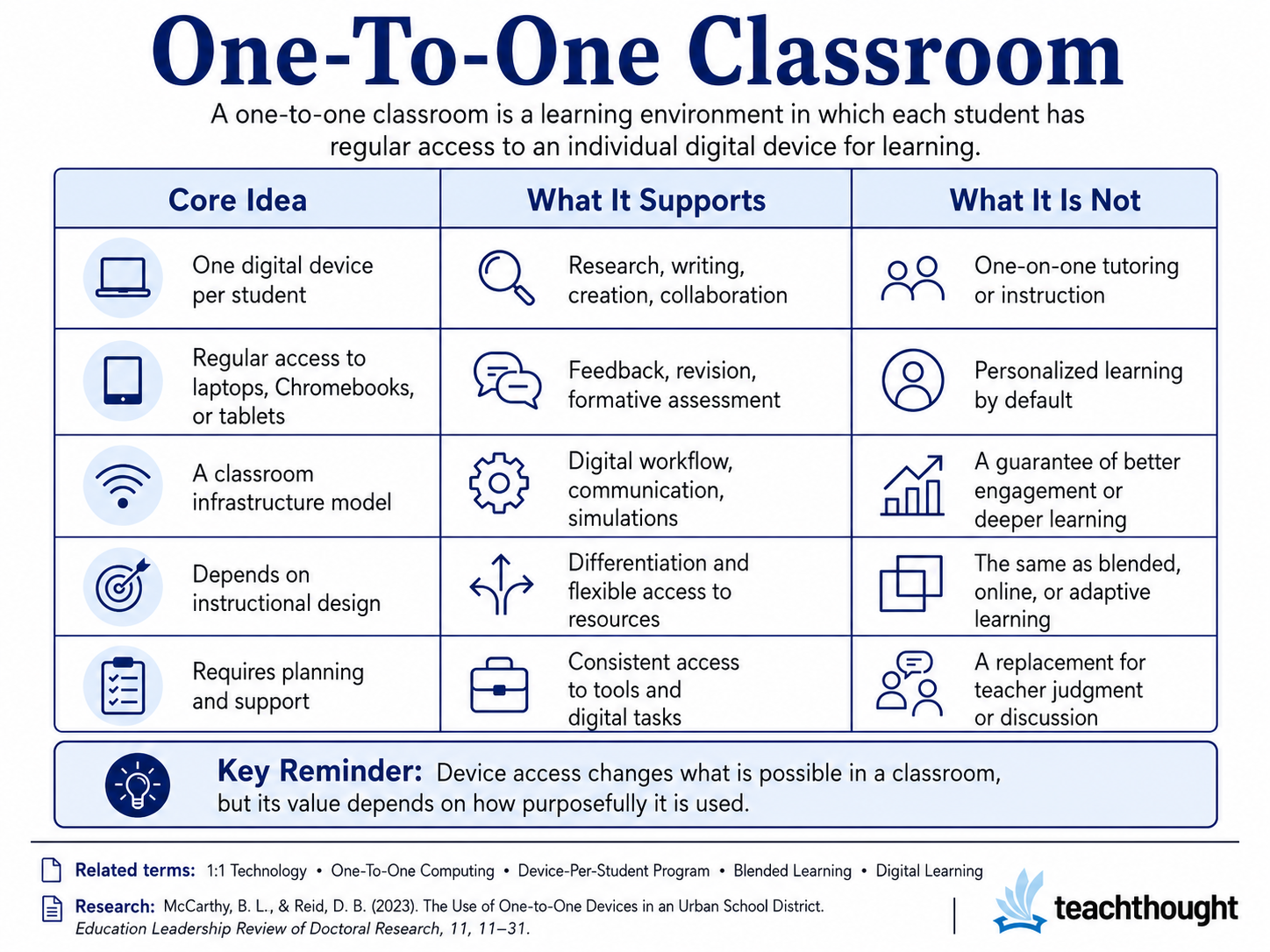
A one-to-one classroom gives each student continuous access to a personal digital device for learning. These setups typically provide laptops, tablets, or Chromebooks that students use throughout the school day and often take home.
The model emerged as schools sought to personalize instruction and close digital divides. Districts from Los Angeles Unified to smaller rural systems have invested in one-to-one programs. Students use devices for online assignments, research, collaboration with peers, and accessing learning management systems like Google Classroom.
One-to-one programs aim to deepen engagement. When students control their own devices, they can work at their own pace, access multimedia resources, and develop digital literacy skills expected in college and careers. Teachers redesign lessons around device use, moving away from textbook-centered instruction toward project-based learning and flipped classrooms.
Implementation varies widely. Some districts provide devices that stay at school. Others send devices home nightly, requiring families to support connectivity and safeguard equipment. Schools manage software, filter content, and monitor device use through mobile device management platforms.
The approach carries trade-offs. Costs remain substantial. Schools must budget for device purchases, repairs, replacement cycles, and technical support staff. Device distractions pose classroom management challenges. Screen time concerns persist among parents and researchers. Equity gaps emerge when internet access differs between wealthy and low-income communities.
Research shows mixed results. Studies indicate improved engagement when implementation includes teacher training and thoughtful pedagogical design. However, device access alone does not guarantee learning gains. Students need purposeful instruction, not just technology. Schools that pair devices with professional development for teachers see stronger outcomes than those distributing technology without support.
One-to-one programs continue expanding as schools prioritize digital readiness. Success depends on treating devices as tools within a broader instructional strategy, not replacements for