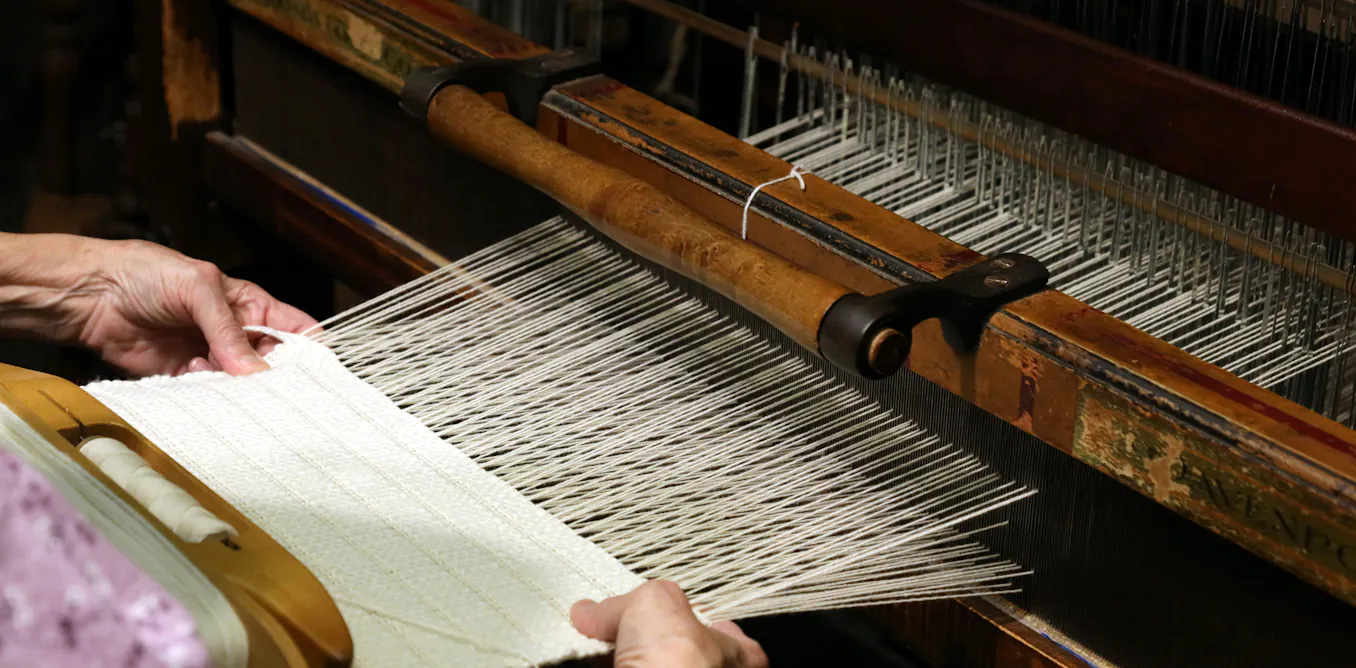
The connection between textile manufacturing and computing runs deeper than most people realize. Jacquard looms, developed in the early 1800s, used punch cards to control fabric patterns. Computer scientists later borrowed this concept to program early machines like the ENIAC and IBM computers. The logical structure of weaving patterns directly influenced how computers process and store information.
Today, textile engineers are reversing this relationship. They now use digital looms and conductive yarns to create fabrics with embedded technological capabilities. Researchers are developing textiles that sense temperature, monitor vital signs, and transmit data. These "smart fabrics" apply computing principles back to textiles, creating a full circle of innovation.
This cross-disciplinary approach has classroom implications. Some educators use weaving and textile projects to teach computational thinking to students who might not respond to traditional computer science instruction. Pattern recognition, sequencing, and logical problem-solving all emerge naturally from designing and executing complex weaves.
Universities including MIT and the Rhode Island School of Design are exploring textile computing seriously. Their research labs combine computer engineers with textile designers and material scientists. This collaboration produces innovations in wearable technology, medical monitoring systems, and sustainable smart fabrics.
The interdisciplinary model offers lessons for STEM education. By connecting crafts like weaving to abstract computing concepts, educators make computer science more tangible and accessible. Students see how historical human practices shaped modern technology, and how future innovation might emerge from unexpected places.
Conductive yarn research also addresses practical problems. Garments embedded with sensors could alert diabetics to blood sugar changes or warn athletes of dangerous heat stress. These applications depend on understanding both fiber properties and electrical engineering. The field requires people trained in multiple domains.
This textile-computing nexus demonstrates how genuine breakthroughs often happen at disciplinary boundaries. Students interested in fashion, sustainability, or craftsmanship now have pathways into technology careers