# When AI Does the Work, Who Does the Learning?
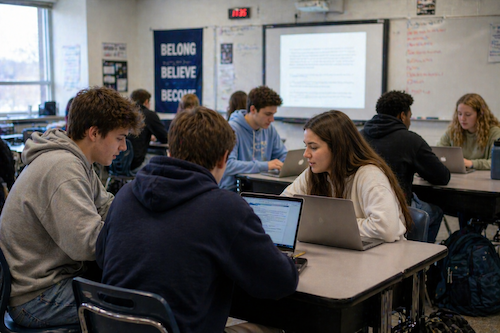
Schools face a fundamental tension as artificial intelligence tools proliferate through classrooms. AI applications that complete assignments, write papers, and solve problems for students may boost grades and productivity, but they undermine the learning process itself.
The problem runs deeper than academic integrity. When students use AI to skip the struggle of wrestling with difficult concepts, they miss the cognitive work that builds understanding. Brain science shows that struggle, failure, and effort activate the neural pathways needed for long-term retention and skill development. An AI tool that shortcuts this process doesn't enhance learning. It replaces it.
Several districts have begun confronting this reality. Some schools implemented blanket bans on classroom AI use. Others, recognizing that AI exists whether schools permit it or not, developed frameworks distinguishing between AI as a learning aid and AI as a learning substitute. The distinction matters. Using AI to check work after completing it differs fundamentally from using AI to generate the work in the first place.
The design of AI systems determines outcomes. Tools built to scaffold learning, provide feedback, or personalize instruction without replacing student effort can support classrooms. Tools designed to automate student work create what researchers call "automation bias," where students default to machine-generated answers rather than developing their own reasoning.
Educators report increasing difficulty assessing what students actually know. A well-written essay generated by AI tells teachers nothing about a student's ability to research, organize ideas, or express thoughts. This information gap weakens instruction because teachers cannot identify learning gaps or adjust teaching accordingly.
The solution requires deliberate policy choices. Schools cannot ignore AI, but they can control how it enters classrooms. Some frameworks require students to submit work showing their thinking process before AI verification. Others limit AI access to specific phases of learning rather than all phases. Still others use AI detection tools alongside honor codes that make students responsible for disclosing tool use