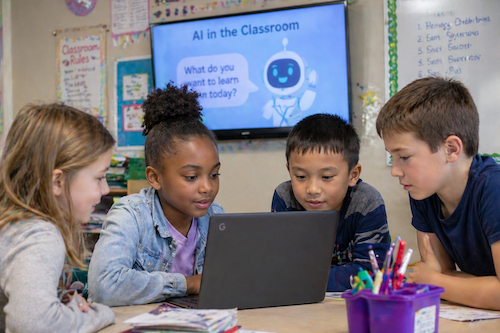
Schools across the country lack consistent approaches to artificial intelligence in classrooms, leaving adoption decisions to individual teachers rather than district-level policy. This fragmented approach creates uneven student experiences and raises questions about equity, pedagogy, and academic integrity.
Teachers in many districts operate without clear guidelines on which AI tools to use, how to integrate them into lessons, or whether students should access generative AI platforms like ChatGPT. Some educators enthusiastically adopt AI for personalized learning and administrative tasks. Others avoid it entirely due to concerns about plagiarism, data privacy, or whether the technology genuinely improves learning outcomes.
The lack of shared structure reflects broader uncertainty in K-12 education. Unlike established technologies such as learning management systems, AI deployment lacks industry standards or best-practice frameworks that most schools have adopted. Districts struggle to balance innovation with caution. Administrators worry about student privacy and vendor agreements. Teachers question whether AI actually serves their instructional goals or simply adds complexity.
This inconsistency matters. Students in one classroom may learn research skills using AI writing assistants to draft and revise essays. Students down the hall might face strict prohibitions on any generative AI use. A middle schooler using AI for math practice receives benefits different from a peer solving problems by hand. These variations affect college readiness and learning trajectories.
Several districts have begun developing AI governance policies. Some require teacher training before classroom implementation. Others establish committees to evaluate tools and set usage boundaries. Yet many schools remain ad hoc, with decisions driven by individual teacher confidence, comfort level, and access to tools rather than deliberate strategy.
The stakes extend beyond consistency. Schools must address data security, copyright concerns, and whether AI substitutes for direct instruction rather than enhancing it. Without clear direction, schools risk repeating patterns from earlier tech adoption cycles, where expensive tools sat unused because teachers lacked training or administrators couldn't articulate pedagogical value.