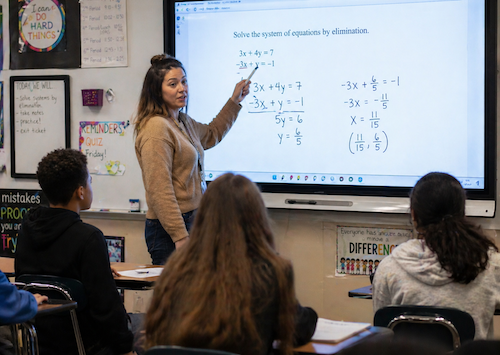
Teacher confidence in mathematics directly shapes student outcomes. A veteran high school math educator discovered this truth after two decades in the classroom when participating in professional learning focused on early math instruction.
District leaders looking to boost teacher confidence in math should pursue four concrete strategies. First, provide sustained professional development rather than one-off workshops. Teachers need ongoing learning opportunities that build depth over time, not surface-level training that ends after a single session.
Second, create space for teachers to examine their own math beliefs and anxieties. Many educators carry negative experiences from their own schooling that unconsciously influence how they teach. Addressing these beliefs directly helps teachers approach instruction with greater confidence and openness.
Third, establish peer collaboration structures. When teachers observe colleagues teaching math effectively and discuss instructional practices together, confidence spreads. Collaborative learning communities reduce isolation and normalize the challenges teachers face.
Fourth, connect professional learning to classroom practice immediately. Teachers gain confidence fastest when they can apply new strategies with their students and see results within weeks, not months. This feedback loop reinforces learning and builds momentum.
The underlying principle matters: as teacher confidence grows, the emotional climate of math instruction shifts. Students perceive when their teachers believe in the subject and in their own ability to teach it effectively. This confidence becomes contagious.
Districts cannot build teacher confidence through mandates or criticism. The process requires investment in genuine learning, vulnerability, and collaborative problem-solving. Teachers who feel supported in their own growth become more willing to take instructional risks and experiment with new approaches.
Mathematics instruction improves when districts treat teachers as capable professionals deserving of thoughtful, sustained support rather than quick fixes. The stakes extend beyond test scores. Confident teachers create classroom environments where students develop healthy relationships with mathematics.