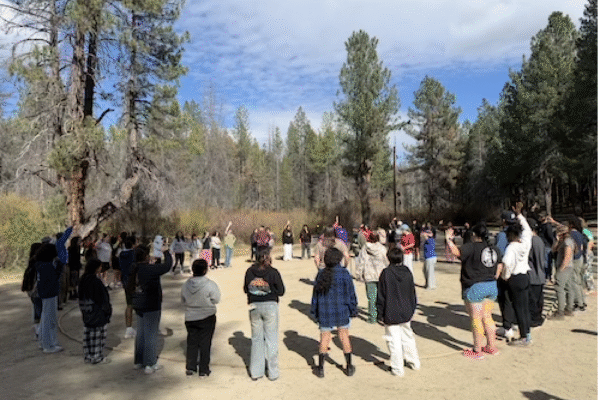
Outdoor education delivers measurable academic gains alongside mental health benefits, research shows.
Learning in natural environments boosts student performance in science, reading, and math, according to studies cited in recent education research. Beyond test scores, outdoor instruction strengthens student motivation, well-being, and overall school engagement.
The evidence spans multiple grade levels and subject areas. When students learn outside, they develop deeper connections to material. A student solving a math problem near a stream engages differently than one working from a worksheet. Natural settings provide tangible, sensory contexts for abstract concepts. Science instruction outdoors offers direct observation of ecosystems, weather patterns, and biological processes. Reading comprehension improves when students engage texts in varied environments rather than confined classrooms.
Schools have operated under competing pressures that push outdoor learning to the margins. Standardized testing demands favor controlled classroom settings. Budget constraints limit field trips and outdoor program development. Teacher training rarely includes outdoor pedagogy. Climate-controlled buildings feel safer to administrators managing liability concerns.
Yet the research trajectory is clear. Students spending regular time outdoors show reduced stress levels and improved focus when they return indoors. Outdoor instruction addresses multiple learning styles simultaneously. A kinesthetic learner benefits from moving through natural space. A visual learner gains from observing real phenomena. Social-emotional development accelerates in outdoor group settings where peer interaction flows naturally.
Districts implementing outdoor education programs report stronger attendance rates and fewer behavioral incidents. Students report greater enjoyment of learning. Teachers note that outdoor instruction sometimes reaches students who struggle indoors.
The barrier remains structural. Schools must allocate time, resources, and staff training to outdoor learning. Curriculum maps need flexibility to accommodate outdoor instruction. Teacher compensation should reflect the additional planning outdoor lessons require.
Reclaiming nature as a classroom represents neither luxury nor optional enrichment. It serves as a foundational learning environment with documented benefits to academics, mental health, and engagement. Schools