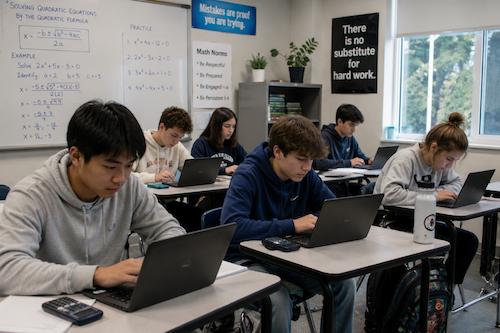
A new survey finds that 68 percent of high-performing students turn to AI tools when they need extra help with math assignments and exams. The data reflects a rapid shift in how students approach mathematics learning, with artificial intelligence emerging as a standard resource alongside traditional tutoring and peer study.
The survey captures a moment when AI adoption in education has moved beyond novelty into routine practice. Top-performing students report using AI chatbots and math-specific applications to work through problems, verify solutions, and understand concepts they find challenging. These tools provide immediate feedback and step-by-step explanations that students say accelerate their learning.
The finding raises both opportunities and concerns for educators and parents. On the positive side, AI tutoring systems operate 24/7 and adapt to individual learning pace, filling gaps that human tutors cannot always meet. Students in rural areas or those unable to afford private instruction gain access to personalized math support. The technology reduces barriers to homework help and exam preparation.
However, the widespread reliance on AI also prompts questions about academic integrity and skill development. Schools must clarify policies distinguishing between using AI as a learning aid versus outsourcing problem-solving entirely. Some educators worry that students who lean heavily on AI may not develop the persistence and struggle-struggle-success cycle that builds deep mathematical understanding.
The survey does not address whether AI use improves actual math achievement or test scores. It also does not specify which AI platforms students prefer or how teachers perceive the trend. These gaps matter for schools designing appropriate AI integration strategies.
Math departments now face concrete decisions: Should students use AI on assignments? Exams? Under what supervision? Districts that establish clear guidelines early will help students harness AI's tutoring potential while protecting learning integrity. The survey signals that ignoring AI's role in math education is no longer an option for schools.