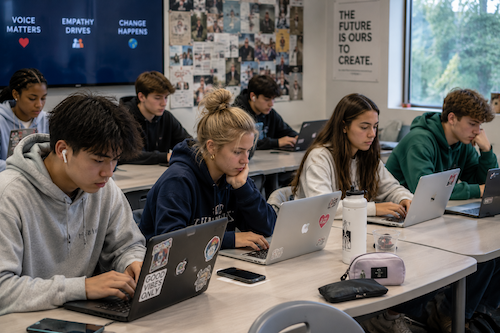
Gen Z students express optimism about artificial intelligence despite widespread concerns about job displacement and technology's societal impact, according to a new survey tracking the generation's career aspirations and values.
The report ranks Gen Z's top 100 dream colleges and preferred employers while examining how young people factor AI into their career planning. Rather than viewing automation as purely threatening, many Gen Z students see AI as a tool they will need to master to remain competitive in the job market.
The survey captures a generation facing distinct economic pressures. Gen Z entered the workforce during economic uncertainty, witnessed rapid technological disruption, and navigates a job market shaped by automation. Yet the data shows this cohort demonstrates resilience in how they approach these challenges.
Young people report wanting to work for companies that integrate AI responsibly and demonstrate ethical technology practices. They prioritize employers with clear AI governance policies and transparency about how the technology affects workers. This preference signals that Gen Z doesn't reject AI outright but demands accountability from organizations deploying it.
The findings reveal a generation thinking pragmatically about their futures. Rather than avoiding tech-forward industries, many Gen Z students actively pursue fields where AI literacy provides competitive advantage. They view AI training and skills as essential career investments, similar to how previous generations treated computer proficiency.
However, the optimism comes with caveats. Gen Z students express legitimate concerns about job security, wage stagnation, and whether traditional education adequately prepares them for AI-integrated workplaces. They worry about underrepresented groups facing disproportionate displacement and question whether reskilling opportunities will be accessible to all workers.
The survey underscores a critical moment for educators and employers. Schools must embed AI literacy and critical thinking about technology throughout curricula, not as optional add-ons. Employers need to signal genuine commitment to workforce development and transparent communication about how automation affects hiring and advancement.
Gen Z's measured optim