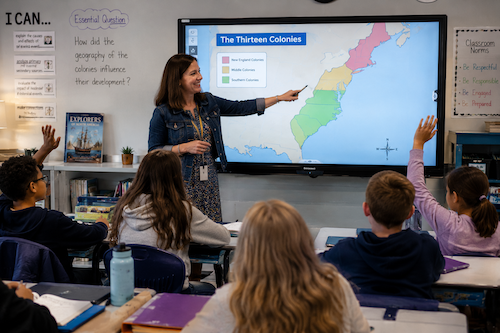
# The Future Researcher in Every Fifth Grader: The Case for Curiosity-First Teaching
A Massachusetts fifth-grade teacher with 26 years in the classroom has built a teaching model centered on cultivating student curiosity rather than passive content consumption. The approach transforms how young learners engage with history and social studies by positioning them as active researchers and critical thinkers.
The teacher describes hating social studies as a student, which shaped her determination to create a different classroom experience. Her method emphasizes student argumentation, questioning, and bringing historical thinking into real life. Rather than lecturing facts, the classroom becomes a space where fifth graders wrestle with evidence, challenge interpretations, and develop their own historical arguments.
This curiosity-first approach aligns with broader education research on how children learn. When students generate their own questions and pursue answers through investigation, retention improves and engagement deepens. The strategy treats elementary students as budding researchers capable of handling complexity, not just receptacles for memorized facts.
The Massachusetts educator's 26-year track record suggests the model works at scale. Her students develop habits of mind that transfer beyond social studies. They learn to ask better questions, evaluate sources critically, and understand that history involves interpretation rather than memorized timelines.
The approach also addresses a real problem in K-12 education. Social studies often ranks low in student interest and teaching priority, squeezed by math and literacy demands. Yet developing historical thinking and civic reasoning matters for informed citizenship and deeper learning across subjects.
Implementing curiosity-first teaching requires shifting classroom culture and teacher mindset. Teachers must tolerate productive struggle, manage student-led discussions, and resist the urge to deliver answers. It demands training and confidence.
The evidence from this teacher's work suggests the investment pays off. When fifth graders argue about historical evidence and wonder about cause and effect, they develop intellectual tools that serve them