# When STEM Lessons Are Too Easy, Students Stop Thinking
Teachers routinely equate student engagement with learning, but research suggests this assumption misses a critical problem. When STEM lessons lack adequate challenge, students may appear engaged while their thinking shuts down entirely.
The distinction matters. A student can be actively involved in a hands-on activity, completing tasks and participating in group work, while simultaneously operating on autopilot. TeachThought's analysis highlights how low-cognitive-demand activities create the illusion of learning without developing deeper understanding or problem-solving skills.
STEM instruction often falls into this trap. Teachers design colorful, interactive lessons with manipulatives and technology, believing motion equals mental engagement. Students build structures, run experiments, or code simple programs. Teachers observe enthusiasm and check the "engaged" box. Yet if the cognitive demand remains minimal, students apply little reasoning and develop shallow knowledge.
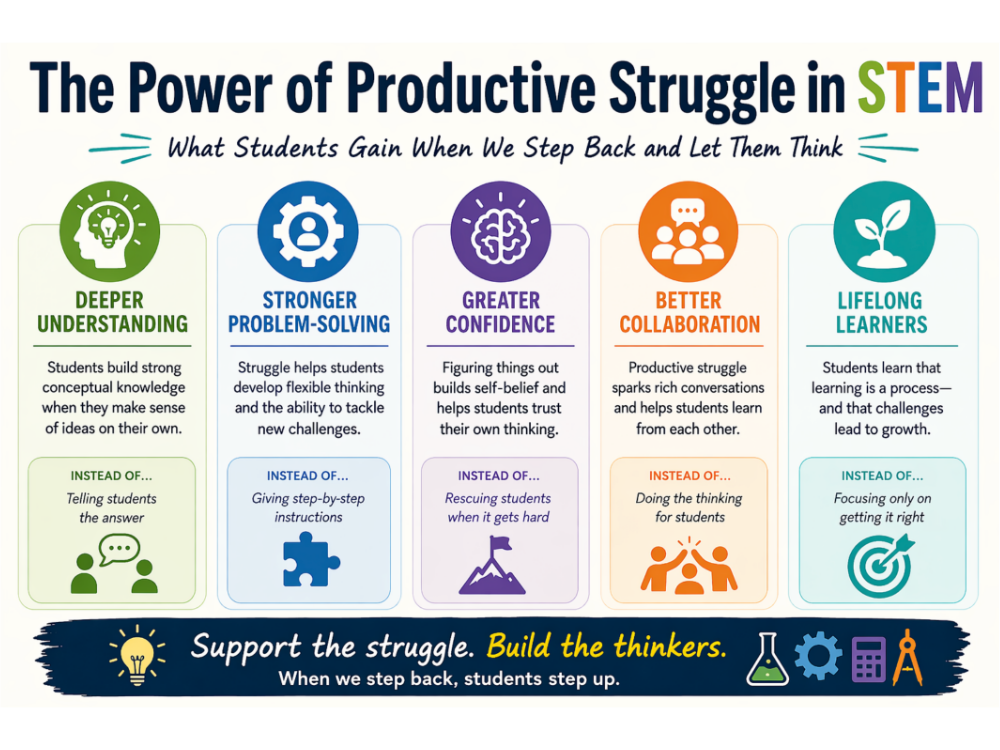
Research on cognitive load and instructional design shows students need struggle to learn. When tasks feel too easy, brains disengage. Students rush through problems, guess rather than reason, and retain little. The sweet spot lies in what educators call productive struggle—challenge significant enough to demand thinking, but achievable with effort and strategy.
The implications reshape how teachers should design STEM lessons. Rather than prioritizing engagement metrics, educators should embed tasks requiring analysis, prediction, and justification. Students need to explain their thinking, encounter problems without obvious solutions, and persist through difficulty. This looks less flashy than hands-on stations but produces stronger learning.
The challenge for schools lies in shifting expectations. Administrators, parents, and students themselves often prefer busier, more entertaining lessons. But engagement divorced from cognitive demand wastes instructional time. STEM classrooms need balance: activities should hold attention while demanding real thinking. When lessons become too easy to maintain that demand, teachers must add complexity, remove scaffolding, or change