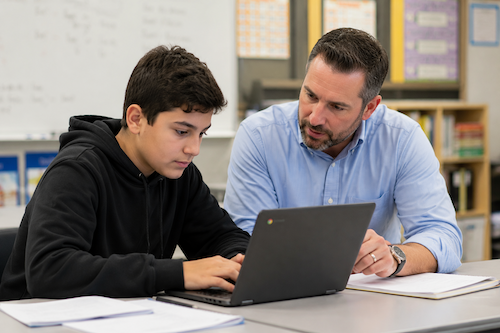
A teacher reflects on the limits of artificial intelligence in education, arguing that algorithmic feedback cannot replace the human relationships that drive student growth.
The educator, who facilitated student conferences recently, highlights a specific case involving a student named Steven who struggled with engagement on a final project. The core tension centers on what students actually need: not faster grading or algorithm-generated comments, but genuine dialogue with teachers who know them individually.
The teacher's position rests on three observations. First, AI feedback lacks context. Automated systems cannot understand why a student disengaged or what barriers exist outside the classroom. Second, students respond differently to human interaction than to machine-generated responses. A teacher's specific comment tied to a student's work patterns carries weight that generic algorithmic suggestions do not. Third, the student-teacher relationship itself drives motivation and learning. When students feel their teacher understands their struggles and believes in their capacity, they invest more effort.
This perspective pushes back against the framing of AI as an efficiency tool that frees teachers to do "more important work." The argument suggests the opposite: grading and feedback are already the important work when done well. Outsourcing them removes a critical touchpoint where teachers communicate expectations and demonstrate investment in individual students.
The piece reflects broader debates in K-12 education about technology adoption. Schools nationwide have rushed to implement AI tools for personalized learning and automated grading, often citing teacher workload. But practitioners increasingly question whether speed and scale serve students or merely serve institutional convenience.
Steven's case exemplifies this gap. A teacher noticing a student's disengagement and responding with direct conversation can diagnose real problems. An algorithm notices patterns but misses meaning. Connection requires presence.
The teacher's conclusion holds practical weight for schools considering AI adoption: technology works best when it handles logistical work, freeing teachers for relational work, not the reverse.