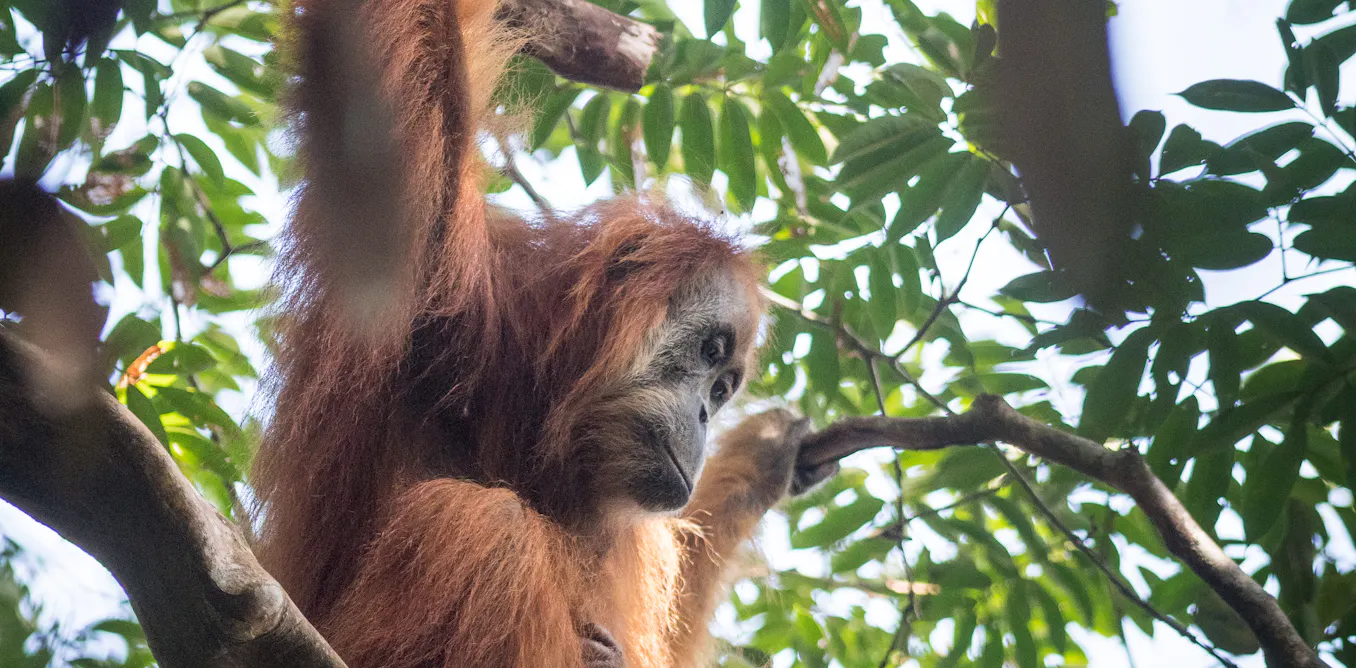
A new study identifies multiple, overlapping threats to the Tapanuli orangutan, one of the world's rarest great apes, with researchers highlighting extraction industries, logging, agricultural expansion, and climate disasters as primary dangers to the species.
The Tapanuli orangutan inhabits a small forest area in North Sumatra, Indonesia. Scientists warn that no single threat acts in isolation. Instead, pressures from mining operations, timber harvesting, farming development, and extreme weather events combine to reduce habitat and food sources. This compound effect accelerates the decline of a population already numbering fewer than 800 individuals.
The research underscores how biodiversity loss connects directly to human economic activity and climate change. Educational implications extend across multiple disciplines. Biology and environmental science curricula benefit from case studies like the Tapanuli orangutan, which demonstrate real-world conservation challenges. Geography courses can examine how land-use patterns and extractive industries reshape ecosystems. Social studies programs can address the tension between economic development and species preservation in developing nations.
For students interested in conservation careers, the Tapanuli orangutan case illustrates why specialists must understand interconnected environmental systems rather than isolated problems. Understanding how logging permits, agricultural subsidies, and climate policy all converge on a single endangered species prepares future conservationists to work across policy domains.
The study also raises questions about corporate accountability and environmental governance that fit into civics and global studies classrooms. How do nations balance development needs with species protection? What role should international bodies play in protecting endangered animals on sovereign territory? These questions connect environmental science to economics, ethics, and political systems.
Teachers can use the Tapanuli orangutan research to engage students in systems thinking. Rather than treating climate change, deforestation, and economic development as separate topics, educators can show how these forces interact to create cascading ecological consequences. This approach prepares students to tackle complex,