# Canvas Breach Exposes Critical Security Gaps in School Infrastructure
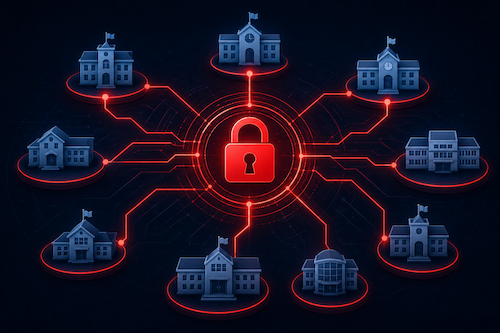
Instructure's Canvas learning management system suffered a significant data breach that exposed vulnerabilities across the education sector. Canvas serves millions of K-12 and higher education students globally, making the breach a watershed moment for school cybersecurity practices.
The breach revealed that traditional security measures—firewalls and endpoint protection—no longer provide adequate defense for modern educational institutions. Schools relying solely on these legacy approaches left student data exposed to attackers who accessed Canvas through compromised credentials and exploited software vulnerabilities.
Data compromised in the breach included student names, email addresses, phone numbers, and potentially sensitive academic records. The attack affected districts and universities of all sizes, from small rural schools to major research institutions. Many schools discovered the breach only after Instructure notified them, indicating delayed detection capabilities.
The incident exposes a persistent reality: schools lag behind private sector organizations in cybersecurity maturity. Budget constraints force many districts to defer security investments, patch systems inconsistently, and operate with minimal dedicated cybersecurity staff. Some schools employ no full-time security personnel despite managing extensive student data.
Security experts recommend schools implement zero-trust architecture, which assumes no user or device can be automatically trusted. Multi-factor authentication on all accounts, regular vulnerability scanning, and timely patch management are no longer optional. Schools should also conduct regular security audits and employee training to identify phishing attempts.
The Canvas breach presents districts with choices. They can treat it as an isolated incident or recognize it as evidence that education technology requires fundamentally different security approaches. Districts investing in comprehensive endpoint detection and response systems, security operations centers, and incident response protocols demonstrate the commitment needed.
State education departments and school boards must acknowledge that data protection is not a technical afterthought. Cybersecurity infrastructure requires sustained funding alongside classroom technology. The breach's lessons apply to every school system