# Finding the "Low Way": Reclaiming Creativity in Schools
A parent's simple question about taking an alternate route reveals a deeper problem in American education: schools have abandoned space for exploration and creative risk-taking in favor of standardized testing and rigid accountability measures.
The "low way" metaphor captures what educators call low-stakes learning, where students work without the pressure of high-stakes assessments hanging over every assignment. In contemporary classrooms dominated by standardized testing regimes and accountability systems, this freedom has largely disappeared. Students face constant evaluation. Teachers teach to tests. Creativity becomes a luxury rather than a core learning tool.
Research in education psychology consistently shows that students learn better when they feel safe to experiment, fail, and revise their thinking. Open-ended exploration builds deeper conceptual understanding than rote memorization. Yet accountability frameworks like state standardized tests and district performance metrics push schools toward teaching content that will appear on assessments, not toward developing creative problem-solving or original thinking.
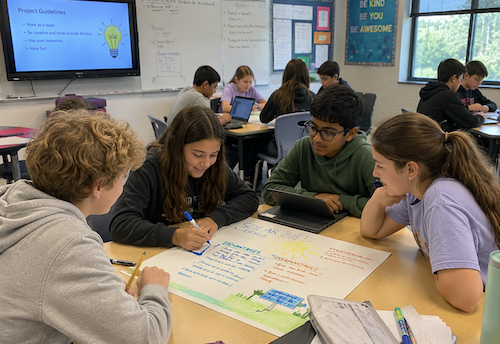
Schools that reclaim space for creativity report stronger student engagement and better long-term outcomes. Project-based learning units, where students tackle real-world problems without predetermined "correct" answers, cultivate the kind of flexible thinking employers increasingly demand. Arts integration, design thinking protocols, and open-ended inquiry accelerate learning across all subjects.
The challenge lies in balancing accountability with autonomy. Parents and policymakers rightfully want evidence that schools work. Tests provide measurable data. But that same data can become a cage that suffocates the very learning it purports to measure.
Reclaiming the "low way" does not mean abandoning assessment or standards. Rather, it means recognizing that some of the most valuable learning happens outside the high-stakes testing framework. Teachers need time to teach. Students need permission to explore dead ends, revise weak ideas, and discover unexpected connections. Schools serious about 21