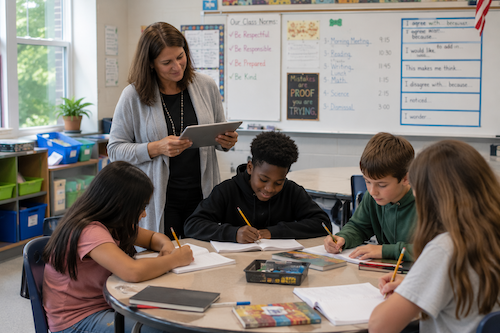
Research consistently shows that students retain more information when reading from paper versus screens, yet most schools are moving in the opposite direction. Rather than abandoning technology in classrooms, education technologists argue the solution lies in building better tools that complement paper-based learning instead of replacing it.
The gap between what science shows and what schools do reflects a fundamental misunderstanding of technology's role in education. Students learn core content more effectively with printed materials. Digital tools work best when they handle administrative tasks, streamline teacher workflows, and provide targeted support, not when they serve as primary delivery mechanisms for instruction.
A technology developer working in education highlighted the paradox directly: schools should invest in tools that make teachers' work more efficient and their impact more powerful, not in systems that increase screen time for students. This distinction matters. A learning management system that reduces grading time or adaptive software that identifies student gaps differs fundamentally from a tablet replacing a textbook.
Current implementation often gets this backwards. Schools purchase expensive devices expecting they will transform learning, then saddle students with hours of screen-based assignments. The evidence tells a different story. Students reading physical text demonstrate better comprehension and retention than those reading identical content on screens. This holds across age groups and subject areas.
The challenge involves rethinking what technology should do in schools. Investment should focus on tools that liberate teachers from paperwork, enable personalized feedback at scale, and allow educators to spend more time on direct instruction rather than administrative burden. Technology excels at these tasks.
Schools face pressure to appear modern and tech-forward. That pressure sometimes overrides pedagogical evidence. Yet the most effective learning environments likely combine the best of both worlds: paper and pencil for core learning, strategically deployed technology for assessment, differentiation, and teacher support.
The path forward requires honest conversations about what technology actually improves in schools. Better technology, used with intention, can serve students well. Technology for