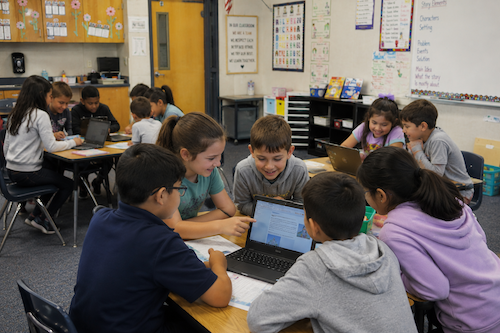
Project-based learning changes how students engage with mathematics by anchoring abstract concepts in real-world design challenges. Teachers implementing this approach report that students develop deeper conceptual understanding rather than memorizing procedures.
One example involves students designing functional backpacks. The project requires students to apply geometry, measurement, proportional reasoning, and budgeting calculations. Rather than solving isolated worksheet problems, students must determine dimensions, calculate material costs, and optimize designs for weight and usability. These constraints force mathematical thinking to serve a purpose students understand.
The shift matters because elementary and middle school math builds sequentially. Each concept requires mastery before students advance. Traditional instruction often leaves gaps in conceptual understanding, leaving students unprepared for algebra and higher mathematics. Project-based learning addresses this by grounding math in contexts students can visualize and manipulate.
Research supports the approach. When students apply math to solve authentic problems, they retain concepts longer and transfer skills to new situations more effectively than peers who learn through isolated skill practice. Students also report increased confidence and reduced math anxiety.
Teachers implementing project-based math instruction note several changes. Students ask better questions. They persist through difficulty because they're solving problems they've defined, not problems assigned from a textbook. Collaboration increases naturally since design work requires input from multiple perspectives. Students also develop metacognitive awareness, explaining their mathematical reasoning rather than just providing answers.
Implementation challenges exist. Teachers need training in facilitating projects rather than delivering content. Classroom time must accommodate the messier, longer work cycles projects require. Assessment shifts from testing procedural fluency to evaluating problem-solving processes and mathematical communication.
Schools adopting project-based math instruction typically see improved standardized test performance alongside gains in student engagement and conceptual understanding. The backpack design project demonstrates that elementary and middle school students can tackle substantive mathematical work when that work connects to outcomes they care about. The foundation built through projects like this prep