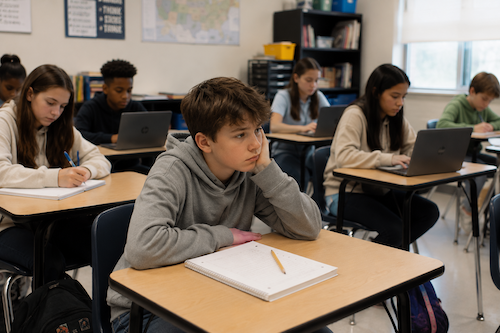
Student disengagement has become a widespread problem in American classrooms, with educators reporting that students are harder to reach than in previous years. The issue extends beyond typical behavioral challenges. Research increasingly shows that disengagement stems from how classrooms are structured and how learning experiences are designed, not primarily from student motivation or conduct.
Teachers face a fundamental mismatch between traditional classroom delivery methods and what modern students need to stay engaged. Passive instruction, where students sit and listen without active participation, fails to capture attention in an age when students interact with dynamic, personalized digital content outside school. Lectures and worksheets compete poorly with experiences designed to be interactive and responsive to individual learners.
The disengagement trend carries real consequences. Lower engagement correlates with reduced academic achievement, higher dropout rates, and diminished long-term learning outcomes. Schools with chronically disengaged populations struggle to meet proficiency targets and close achievement gaps.
Forward-thinking schools are reimagining classroom experiences to rebuild engagement. They implement project-based learning, where students tackle real-world problems rather than abstract exercises. Collaborative work replaces isolated seatwork. Teachers act as facilitators who guide inquiry rather than sole information deliverers. Some districts incorporate student choice into curriculum, allowing learners to pursue questions that interest them within learning standards.
Technology plays a supporting role when schools use it purposefully. Adaptive platforms that adjust difficulty to individual students, digital collaboration tools that enable group work, and data dashboards that help teachers monitor understanding in real time all contribute to more responsive learning environments.
Addressing disengagement requires districts to invest in professional development so teachers can redesign instruction. It demands that school leaders protect class time from excessive testing and standardized assessment schedules that fragment learning. It means rethinking classroom physical layouts, pacing, and assessment methods.
Schools that treat disengagement as a design problem rather than a student problem report measurable improvements in