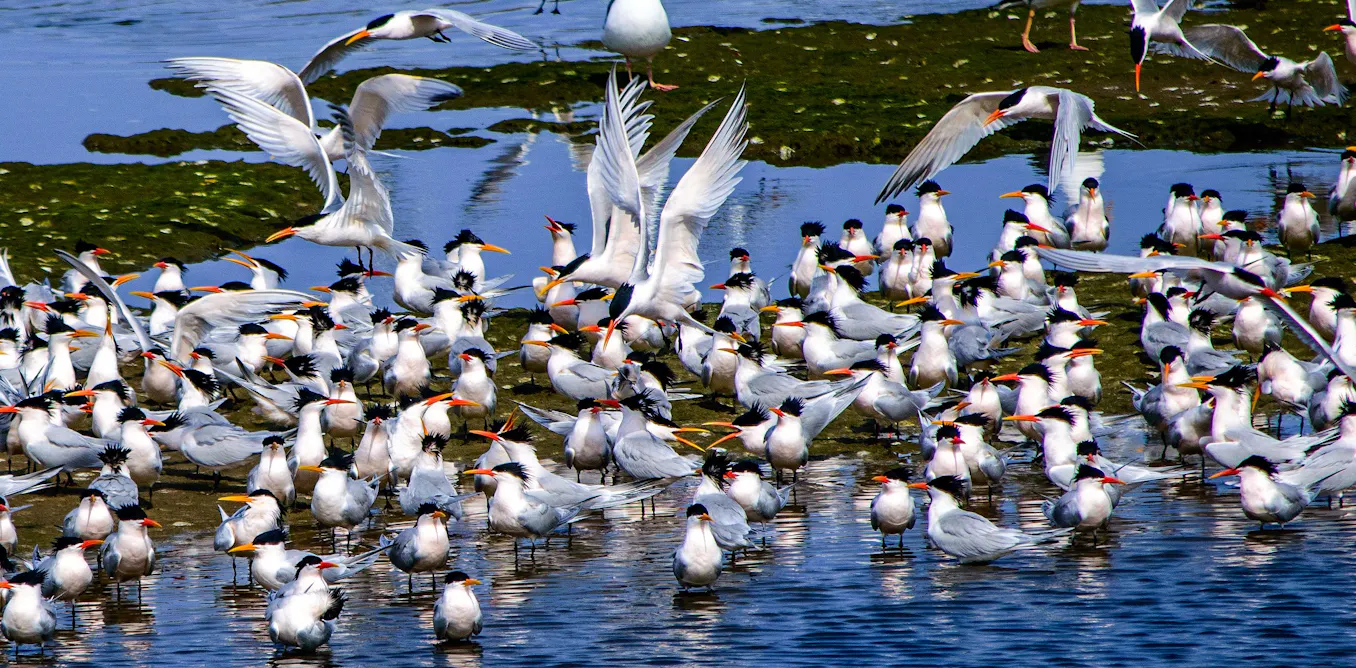
# Australia Faces Critical Bird Flu Crisis in Wildlife
Australia confronts an escalating avian influenza outbreak across wild bird populations, marking a transition from warning phase to active crisis management. The virus spreads through migratory routes and local bird movements, creating a challenge that officials cannot simply prevent but must monitor and contain strategically.
The outbreak threatens native bird species already vulnerable to other environmental pressures. Unlike controlled poultry operations where biosecurity measures protect flocks, wild birds operate across borders and ecosystems beyond direct human control. Movement patterns of migration, feeding, and nesting create natural transmission vectors that traditional agriculture protocols cannot address.
Health authorities face two distinct paths forward. An unmanaged approach allows the virus to spread without coordination, potentially devastating populations and creating environmental cascades across ecosystems. A closely tracked system requires real-time monitoring networks, rapid disease reporting from field researchers, and coordinated response protocols across state and federal agencies.
Current detection efforts focus on sentinel monitoring, where disease surveillance teams track illness patterns in wild populations. Testing dead or sick birds provides early warning of virus spread, though resource constraints limit comprehensive sampling across Australia's vast territory. State-based wildlife agencies and research institutions must share data seamlessly to identify outbreaks before they reach critical density.
Economic impacts extend beyond environmental concerns. Commercial poultry operations face heightened biosecurity requirements. Regional communities dependent on wildlife tourism risk disruptions if populations decline sharply.
The choice between managed and unmanaged outbreak responses determines both wildlife survival rates and public health protection. Managed systems require sustained funding, trained personnel, and technological infrastructure for rapid testing and response coordination. Without these investments, Australia risks losing unique bird species while allowing the virus to establish entrenched circulation patterns that prove exponentially harder to contain.
The window for proactive management remains open but closing.