# How Breaking Words Changed the Way My Students Approach Language
An educator discovered that students often decode words phonetically without understanding their meaning, a gap that undermines reading comprehension and vocabulary development.
The teacher noticed a pattern in the classroom: students could successfully sound out unfamiliar words using phonics skills, but when asked to define or explain those same words, they became silent or disengaged. This disconnect revealed a fundamental problem in how reading instruction typically proceeds. Students master decoding without building semantic knowledge, leaving them unable to access meaning from text.
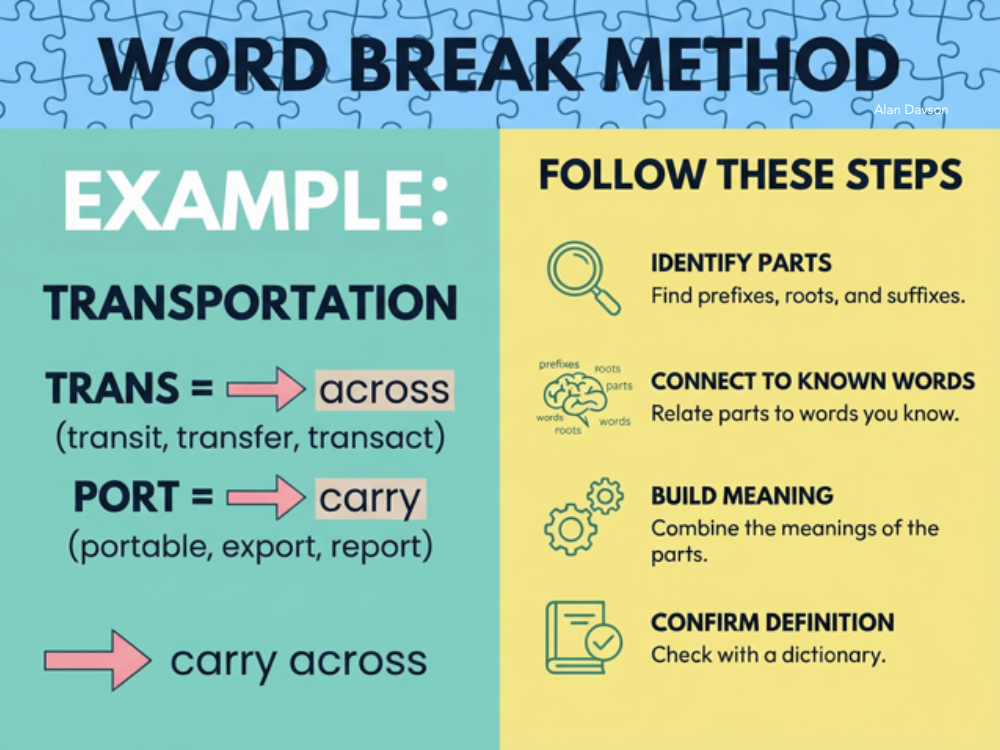
The solution involved teaching students to break words into morphological components—prefixes, roots, and suffixes. Rather than treating each word as an isolated unit to sound out, students learned to recognize word parts that carry meaning across multiple words. For example, understanding the prefix "un-" or the suffix "-tion" allows students to infer meaning in dozens of different words.
This approach changed student behavior. Once students grasped how word parts connect to meaning, they became more willing to engage with unfamiliar vocabulary. They moved from passive decoding to active problem-solving. Instead of shutting down when encountering a new word, they could apply a system to unlock its meaning.
The strategy aligns with research on vocabulary instruction, which shows that morphological awareness develops reading comprehension more effectively than isolated word lists. When students understand how words are constructed, they gain tools to tackle unfamiliar words independently, reduce anxiety around reading, and build confidence in their ability to navigate complex texts.
This work highlights a gap in traditional phonics-only instruction. While decoding skills are necessary, they are incomplete without attention to word meaning and structure. Students need both the ability to sound words out and the knowledge systems to understand what they have decoded. Teachers who integrate morphological instruction into their reading lessons help students move beyond surface-level word recognition toward genuine comprehension and ownership of vocabulary.