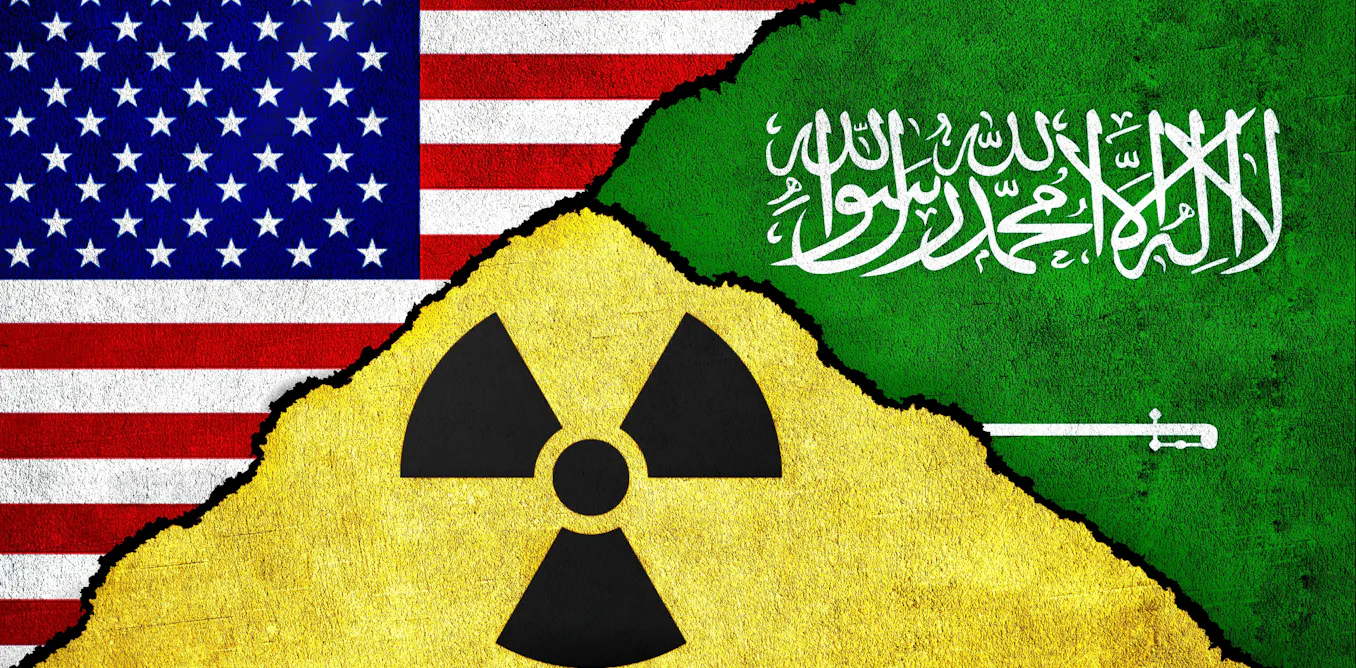
# Saudi Arabia's Nuclear Path: Historical Constraints and Current Pressures
Saudi Arabia has not pursued nuclear weapons despite possessing the financial resources and technical capacity to do so. Historical patterns reveal that U.S. pressure combined with economic considerations have repeatedly deterred the kingdom from crossing that threshold.
Throughout the Cold War and beyond, Saudi Arabia maintained close military and security ties with the United States. These partnerships came with explicit and implicit expectations about nuclear restraint. American administrations consistently signaled that developing atomic weapons would jeopardize the strategic relationship that underpins Saudi regional influence and security guarantees.
Economic factors reinforced this constraint. Saudi Arabia's wealth derives primarily from oil exports. Nuclear weapons development would trigger international sanctions, disrupt trade relationships, and risk destabilizing the global oil market that benefits the kingdom. The cost-benefit analysis for policymakers has consistently favored maintaining economic stability over pursuing nuclear capability.
Historical precedent matters here. When South Africa developed nuclear weapons in the 1970s and 1980s, it faced mounting international isolation and sanctions. Pakistan and India pursued nuclear programs despite international opposition but paid steep economic prices. These examples provided Saudi leaders with concrete evidence of the consequences nuclear development entails.
Regional dynamics also shape Saudi calculations. Iran's nuclear program created security concerns but did not fundamentally alter Saudi cost-benefit assessments. Even as tensions escalated in the Persian Gulf, Saudi Arabia did not initiate weapons development. Instead, the kingdom deepened military cooperation with the United States and purchased advanced conventional systems.
The Abraham Accords and normalization agreements with Israel between 2020 and 2023 further locked Saudi Arabia into patterns of conventional military reliance rather than nuclear ambition. These diplomatic developments tied Saudi interests more closely to American security commitments and reduced the strategic rationale for independent nuclear capability.
Understanding this history provides context for current policy discussions. Saudi Arabia's choices reflect rational calculation