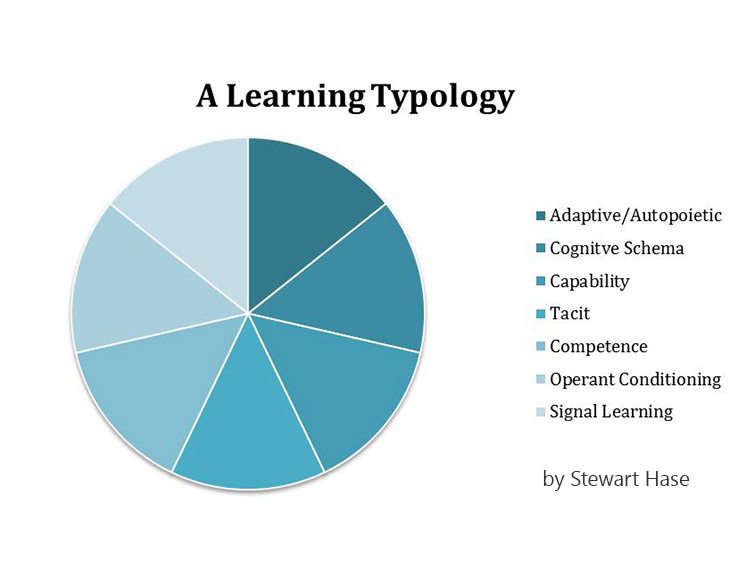
# A Learning Typology Offers Seven Pathways to Understanding
TeachThought has published a framework that identifies seven distinct ways humans develop understanding, framed as a typology rather than a taxonomy. The distinction matters. A typology groups items by shared characteristics and patterns. A taxonomy ranks them hierarchically. This framework treats all seven modes as equally valid pathways to learning.
The typology moves beyond older models like learning styles or multiple intelligences. Rather than sorting students into fixed categories, it describes how understanding actually develops across different contexts and disciplines. Each pathway reflects how people process information, build knowledge, and demonstrate competency.
The framework recognizes that learners don't rely on a single mode. A student might grasp calculus through logical reasoning, understand history through narrative and storytelling, and develop artistic skill through kinesthetic practice and feedback. Teachers benefit from knowing which pathways activate understanding for which concepts.
This approach aligns with contemporary cognitive science. Research shows that understanding isn't monolithic. The brain activates different networks depending on the task. A physics student needs different cognitive engagement than a literature student. An engineer solving a structural problem uses different processing patterns than a musician learning composition.
Typologies matter in classroom design. When teachers recognize multiple pathways to understanding, they build lessons that activate several modes simultaneously. A history lesson might combine primary source analysis (logical), storytelling (narrative), timeline visualization (spatial), and debate (social interaction). This redundancy strengthens retention and deepens comprehension across learner profiles.
The framework also addresses equity. Students labeled "struggling" or "low-ability" often excel when instruction activates their preferred pathways. A student who struggles with textbook reading might demonstrate sophisticated understanding through discussion, visual representation, or hands-on application.
TeachThought's typology provides teachers with a practical lens for instructional design. Rather than asking which learning style a student has,