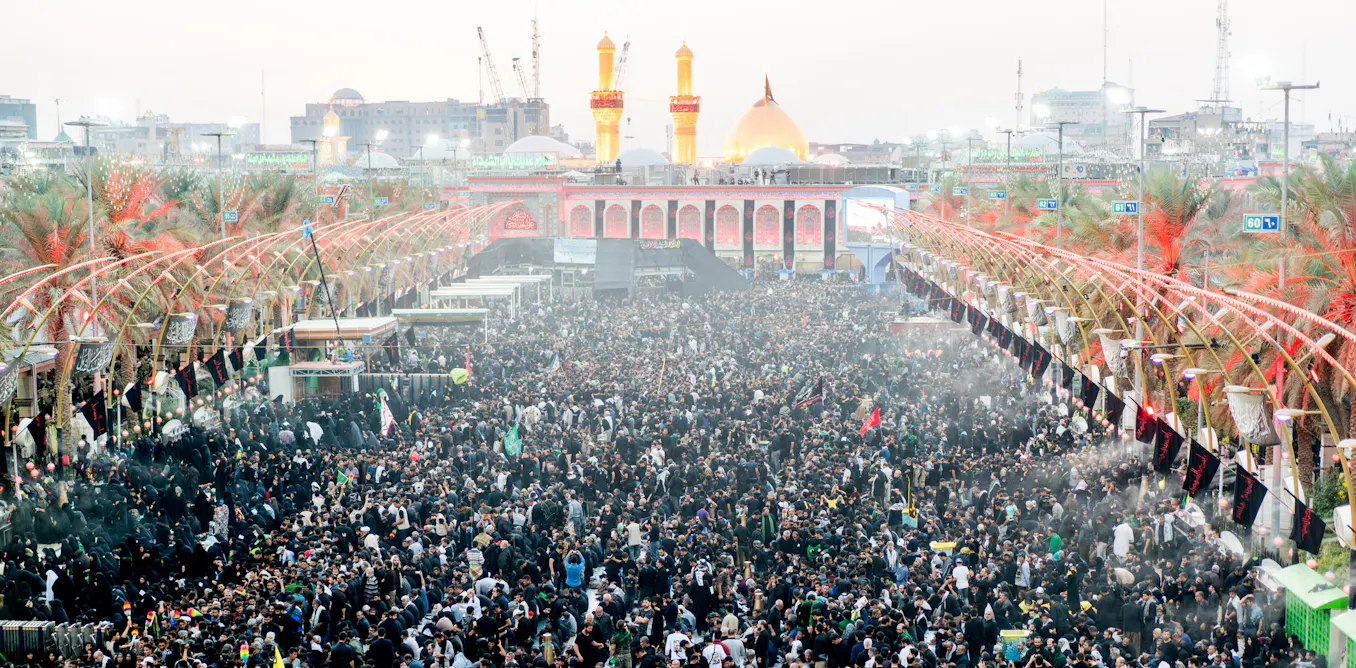
# Millions of Shiite Muslims Journey to Karbala for Arbaeen Pilgrimage
Each year, millions of Shiite Muslims undertake one of the world's largest religious pilgrimages to Karbala, Iraq, during Arbaeen. The event commemorates the death of Husayn, the grandson of the Prophet Muhammad, whose killing in 680 CE at the Battle of Karbala remains central to Shiite theology and identity.
Arbaeen falls on the 40th day after Ashura, the 10th day of Muharram in the Islamic calendar. Pilgrims travel by foot, vehicle, and bus across Iraq and from countries worldwide to reach Karbala's sacred shrines. The journey represents both spiritual devotion and community solidarity for Shiite communities globally.
Husayn's death holds profound meaning in Shiite Islam. His martyrdom symbolizes resistance against tyranny and injustice. Pilgrims view participation in Arbaeen as an act of mourning, remembrance, and spiritual renewal. The pilgrimage reinforces core Shiite values around suffering, sacrifice, and standing against oppression.
The scale of Arbaeen rivals major global religious events. In recent years, pilgrimage numbers have exceeded 20 million participants. Iraqi authorities, along with volunteer organizations, mobilize resources to manage crowds, provide security, medical services, and hospitality stations along pilgrimage routes.
The event also shapes contemporary Iraq's social fabric. Arbaeen brings together Shiites from diverse backgrounds and nationalities. Local communities in Iraq provide food, shelter, and assistance to travelers. This communal support reflects both religious obligation and Iraqi cultural hospitality traditions.
Security remains a consideration, particularly following years of conflict in Iraq. Iraqi security forces increase patrols during pilgrimage