# What Is A One-to-One Classroom?
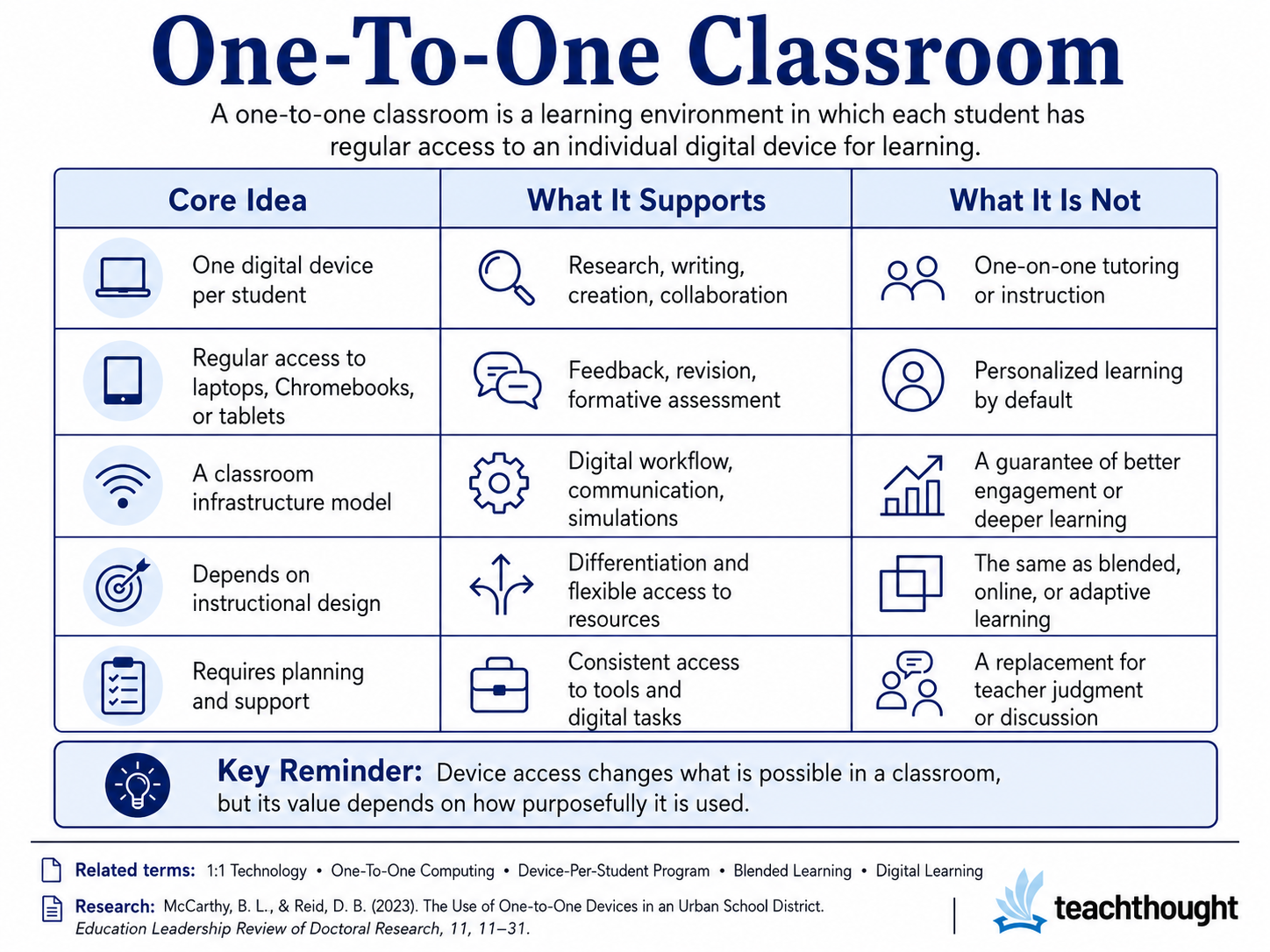
A one-to-one classroom provides each student with sustained access to a personal digital device, typically a laptop, tablet, or Chromebook. This model transforms how instruction happens by embedding technology into daily learning rather than treating it as a supplemental tool.
In traditional computer labs, students share machines on a rotating schedule. One-to-one programs eliminate this constraint. Students bring devices home, use them across multiple classes, and access learning materials continuously. Teachers design lessons around consistent device availability rather than working around limited lab schedules.
The setup varies by school and budget. Some districts provide devices to all students regardless of socioeconomic status, ensuring equitable access. Others allow families to opt into programs or require device purchases. The most inclusive models eliminate cost barriers by supplying technology free to students who need it.
One-to-one environments reshape classroom practice. Teachers can assign digital homework, collect work online, and provide real-time feedback. Students engage with interactive software, conduct research independently, and develop digital literacy skills alongside content knowledge. Collaboration shifts, too. Students can work together on shared documents, participate in online discussions, and present work digitally.
Implementation challenges persist. Schools must invest in infrastructure including reliable WiFi, technical support staff, and cybersecurity systems. Teachers need professional development to integrate devices effectively. Device management policies must balance access with appropriate use. Screen time concerns remain valid, particularly in younger grades.
The pandemic accelerated one-to-one adoption as schools moved to remote learning. Many districts maintained these programs after reopening, recognizing their value for hybrid and in-person instruction. Research shows mixed results. Student engagement often increases, and device access narrows digital divides for disadvantaged students. Academic gains depend heavily on how teachers implement the technology. Devices alone do not improve learning. Thoughtful pedagogy does.
One-to