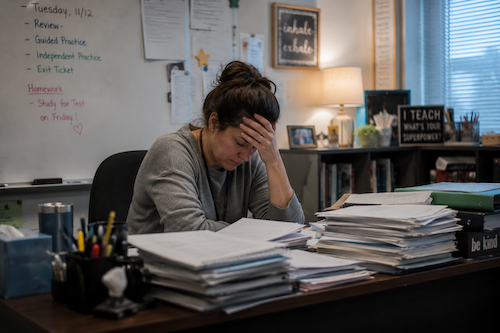
Teacher stress remains significantly higher than that of comparable workers, despite a modest decline in 2026, according to recent data. Teachers continue to report worse overall well-being and greater psychological strain than peers in other professions at similar income levels.
The data reveals a workforce under sustained pressure. Beyond stress itself, teachers report lower compensation, reliance on second jobs to make ends meet, and spending their own money on classroom supplies. These financial pressures compound the emotional toll of the profession.
The modest improvement in 2026 offers limited relief. Teachers still face burnout at rates that far exceed national benchmarks for similar occupations. This pattern reflects systemic challenges that fluctuate only slightly year to year, leaving the teaching profession fundamentally strained.
The burnout crisis affects teacher retention and classroom quality. Schools lose experienced educators to exhaustion faster than they can replace them. When teachers work second jobs or worry about bills, their energy for lesson planning, student feedback, and professional development shrinks. Students feel the effects through less engaged instruction and higher teacher turnover.
Several factors drive persistent burnout: inadequate salaries that haven't kept pace with inflation, growing class sizes, increased administrative burden from standardized testing and compliance requirements, and limited classroom autonomy. Many teachers also manage student mental health crises with minimal support staff.
The out-of-pocket classroom spending highlights another burden. Teachers spend hundreds annually on markers, paper, books, and technology that schools don't fund. This spending reflects both budget shortfalls and teacher commitment, yet drains household finances further.
Addressing burnout requires structural change. School districts need to prioritize competitive salaries, reduce class sizes, streamline administrative tasks, and provide adequate mental health resources. Without investment in these areas, the teaching profession will continue losing talented educators to burnout, regardless of annual stress measurements that tick downward marginally.