# Summer Reading on Learning Science Gives Schools a New Framework
Teachers and administrators spend summers seeking practical answers to persistent classroom challenges. One emerging focus: the science of learning, a research-based approach that helps educators identify which strategies actually move the needle for student achievement.
The science of learning draws from cognitive psychology and neuroscience to explain how brains acquire and retain information. Key principles include spaced repetition, interleaving different types of problems, and low-stakes testing for retrieval practice. Schools that adopt these methods report measurable improvements in student retention and performance.
Unlike trendy pedagogical fads, learning science rests on decades of peer-reviewed research. Studies conducted at universities like the University of California and the University of Texas demonstrate that retrieval practice beats passive reading. Spacing study sessions produces deeper retention than cramming. Students learn better when they interleave practice problems rather than blocking by type.
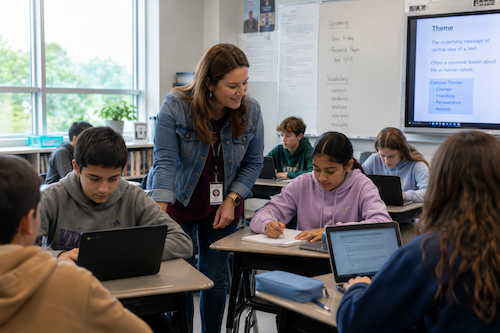
For educators, the practical value lies in redirecting effort. Teachers often invest time in strategies that feel intuitive but lack evidence. The science of learning offers clarity. A classroom built on these principles looks different. Teachers assign frequent low-stakes quizzes not to punish but to strengthen memory. Homework mixes problem types instead of drilling one skill at a time. Lessons space concepts across weeks rather than covering everything in one unit.
Summer reading programs for staff now frequently feature books like "Make It Stick" by Brown, Roediger, and McDaniel, which translates learning science into classroom language. Professional development sessions explore how to redesign curricula and assessments using evidence-based practices.
The shift matters because schools operate under real constraints. Budgets are tight. Instructional time is limited. Adopting learning science doesn't require expensive new programs or materials. It requires reimagining how existing time gets used. When teachers understand how memory and learning actually work, they make smarter