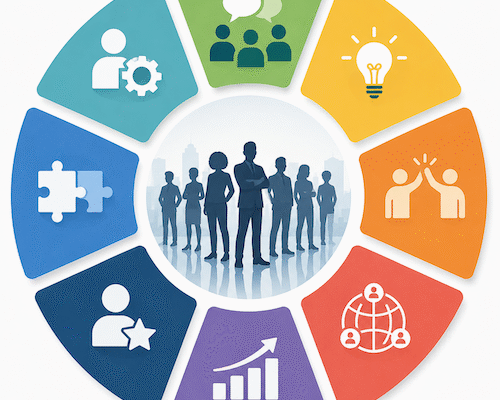
Schools are reshaping how they teach job readiness, moving beyond traditional career classes to embed employability skills across all subjects and grade levels.
The shift reflects growing employer demands for workers who communicate clearly, solve problems collaboratively, and adapt to change. Rather than isolating these competencies in standalone career courses, educators now weave them into English, math, science, and social studies classes.
This integration starts early. Elementary teachers assign group projects that require students to negotiate roles and explain their thinking. Middle school teachers structure assignments so students practice presenting findings and receiving feedback. High school courses emphasize real-world problem-solving tied to industry contexts.
The approach differs from earlier models that treated career readiness as a senior-year concern. Research shows that employability skills develop over time through repeated practice across contexts. A student who only learns teamwork in a career class lacks the reinforcement needed to apply it in chemistry or history.
Teachers report that this method deepens learning in core subjects too. When students know their math work connects to construction, engineering, or finance, engagement rises. When they present science findings to actual audiences, communication skills improve alongside content mastery.
Schools implementing this strategy face practical challenges. Teachers need professional development to identify where employability skills fit naturally within their courses. Curriculum coordinators must design coherent progressions so skills build rather than repeat. Assessment becomes more complex when tracking soft skills alongside academic benchmarks.
Some districts partner with employers and community organizations to create authentic learning experiences. Students intern, work on real projects, or receive mentorship that connects classroom skills to career realities. These partnerships help teachers understand what employers actually need.
The stakes are high. Labor market data shows employers struggle to find candidates with solid technical skills paired with collaboration, critical thinking, and communication abilities. Students who leave high school without these competencies face barriers to college and career success.
This reimagined approach treats employability not as preparation for