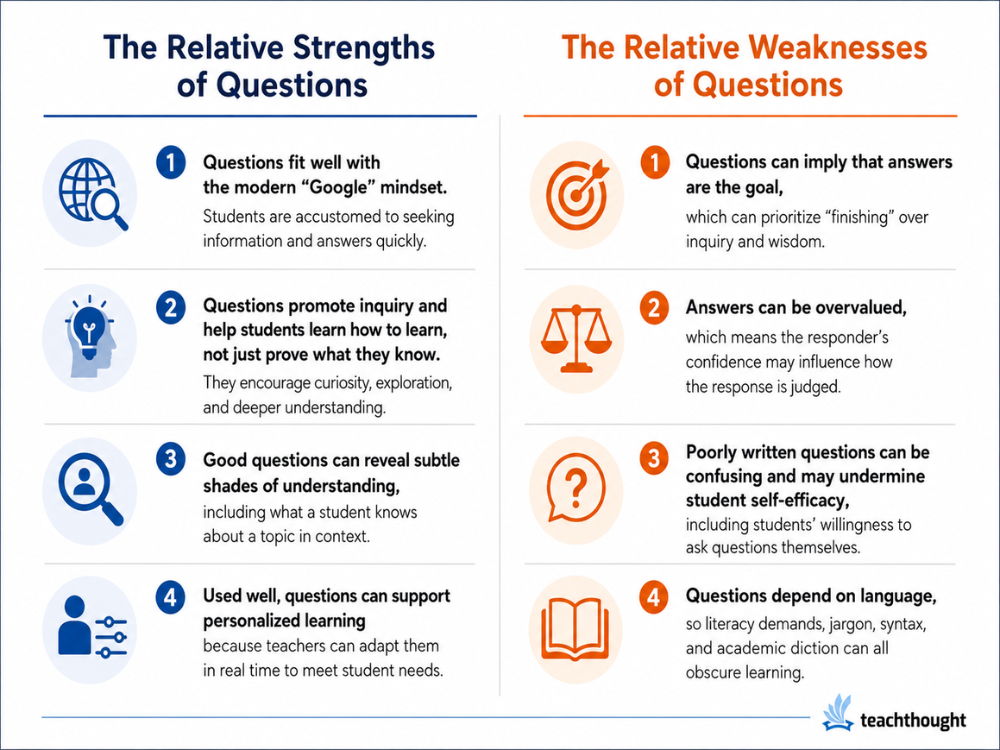
Teachers who ask effective questions in the classroom shape how deeply students think and learn. Research confirms that questioning quality directly correlates with student comprehension and critical thinking skills.
Effective classroom questioning follows specific patterns. Open-ended questions that require students to explain reasoning produce stronger learning outcomes than simple yes-or-no or factual recall questions. When teachers pause after asking a question, students have more time to formulate thoughtful responses rather than rushing to answer. This wait time, typically three to five seconds, allows struggling students to engage and pushes advanced students to develop more complex thinking.
The timing and sequencing of questions matter equally. Teachers should begin with lower-order questions that establish foundational knowledge, then progress to higher-order questions that demand analysis, evaluation, and synthesis. This scaffolding prevents students from feeling overwhelmed while building toward deeper understanding.
Questioning also serves as a formative assessment tool. When teachers listen carefully to student responses, they identify knowledge gaps and misconceptions in real time. A student's answer reveals whether instruction should continue, slow down, or take a different approach. This responsive teaching adjusts instruction based on actual student understanding rather than assumptions.
The physical environment affects questioning effectiveness too. Teachers who circulate around the room, maintain eye contact, and avoid always calling on hand-raisers create more inclusive discussions. Students who might not volunteer gain confidence when teachers cold-call them with supportive language and genuine interest in their thinking.
Training teachers to question more strategically yields measurable results. Schools that invest in professional development focused on questioning techniques report improvements in student engagement and achievement. The skill requires practice. Teachers benefit from analyzing their own questioning patterns, sometimes by recording lessons and counting question types and wait times.
Authentic understanding reveals itself through questions. A student who can ask probing follow-up questions demonstrates deeper learning than one who simply answers them correctly. When classrooms become spaces where asking questions is valued as