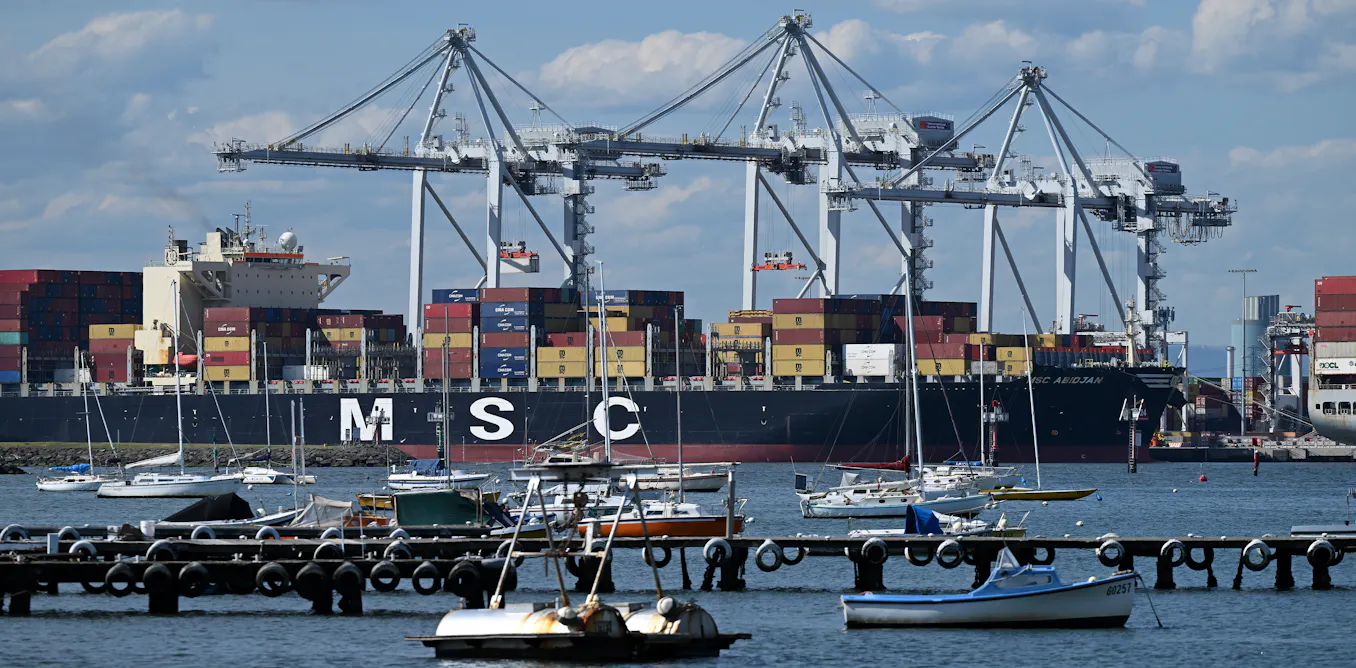
# Australia's Maritime Vulnerability Extends Beyond Fuel Supply
Australia has announced a new fuel refinery, but the country faces deeper vulnerabilities tied to its dependence on sea-based imports that extend far beyond energy security.
The refinery represents a step toward domestic fuel production. Yet Australia remains exposed to shipping disruptions that could cripple supply chains for goods ranging from medicines to food. Without a comprehensive maritime strategy, the nation lacks adequate safeguards against port closures, piracy, geopolitical conflict, or natural disasters that could cut off critical imports.
Australia's geographic isolation makes it reliant on maritime trade for survival. Approximately 99 percent of Australia's international trade travels by sea. The country imports essential pharmaceuticals, raw materials, manufactured goods, and food products that support both the economy and public health. A sustained shipping disruption would ripple across multiple sectors simultaneously.
The fuel refinery addresses one sector. But policymakers have not articulated a cohesive strategy to build resilience across the entire import system. This requires diversifying shipping routes, stockpiling essential goods, investing in domestic manufacturing capacity for critical items, and establishing emergency protocols for supply chain failures.
Other nations have taken these steps seriously. Singapore and Japan have developed comprehensive maritime security frameworks. The United States has invested in domestic production and strategic reserves for goods deemed essential to national security.
Australia's approach remains fragmented. Different industries manage their own supply chains without coordinated government oversight. No single authority tracks vulnerability across the full spectrum of imports or coordinates responses when disruptions occur.
Building maritime resilience requires long-term commitment and investment. Governments need to identify which imports are truly critical to national security and public welfare. Then they must develop redundant systems, alternative suppliers, and domestic production capacity where economically feasible.
The fuel refinery is necessary but insufficient. Australia needs a national maritime strategy that acknowledges the country's vulnerability