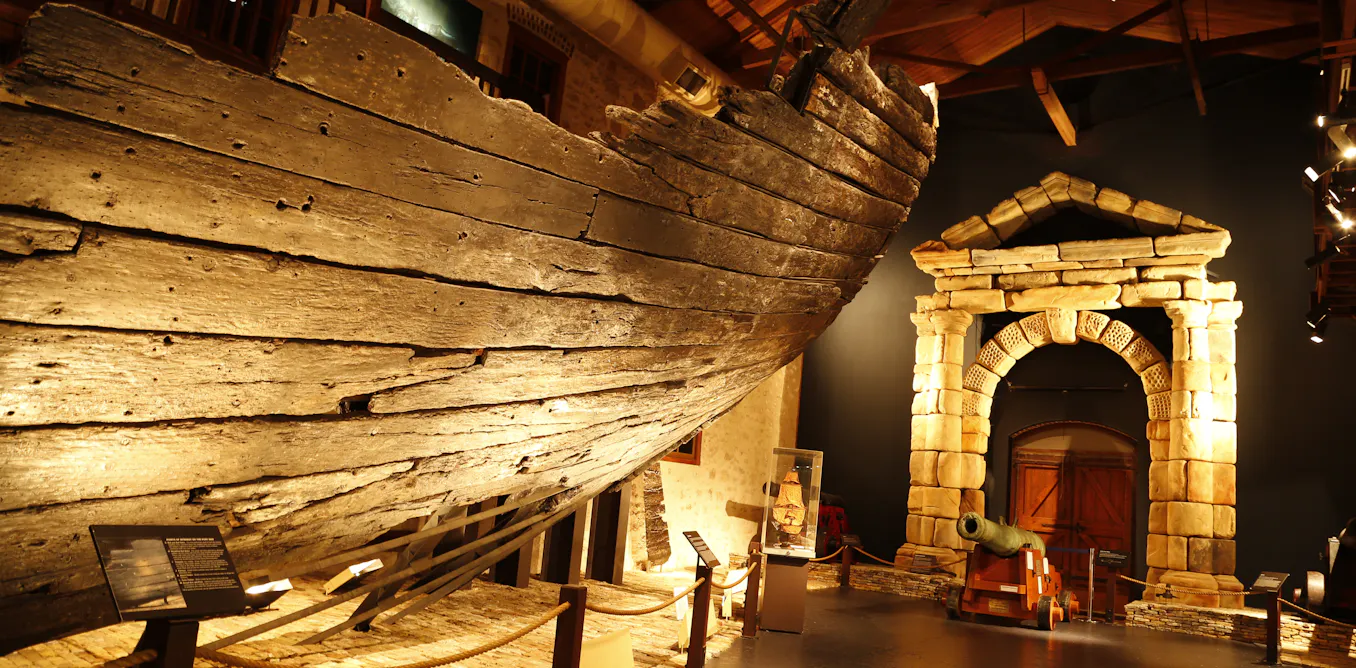
# Seventeenth-Century Shipwreck Reveals Early Global Trade Networks
Researchers analyzing crystals from the Dutch East India Company's Batavia, which sank in 1629, have uncovered evidence of international commerce networks that shaped early capitalism. The study examines mineral specimens from the wreck's cargo, revealing trade routes and supply chains that connected Europe, Asia, and the Indian Ocean world.
The Batavia carried goods destined for the VOC's Asian operations, and its wreckage off the Australian coast has preserved materials for nearly four centuries. By studying the crystals and minerals aboard, scientists traced their geographic origins and the deliberate commercial strategies behind their transport. These physical specimens document how merchants sourced materials from multiple continents and moved them across vast distances for profit.
The research demonstrates how archaeological evidence captures the mechanics of early modern trade. Rather than relying solely on written records, which often proved incomplete or biased, the chemical composition and structure of minerals provide objective data about commerce patterns. This approach allows historians to reconstruct supply chains with precision impossible through traditional documentation alone.
The findings offer context for understanding how contemporary global commerce evolved. The VOC operated as a monopoly, controlling spice trade and other valuable commodities. Its trading networks established patterns of resource extraction and international distribution that persist today. The Batavia's cargo reflects a crucial moment when European companies began systematizing global commerce on an unprecedented scale.
For educators and students, the study illustrates how science and history intersect. Crystallography, geology, and materials analysis become tools for understanding economic history. Museums and universities increasingly use similar techniques to reexamine historical collections, extracting data from objects previously valued only for their aesthetic or monetary worth.
The research appears in peer-reviewed journals and has implications for how institutions catalog and study maritime artifacts. Archaeological teams continue recovering materials from the Batavia wreck site, suggesting future studies