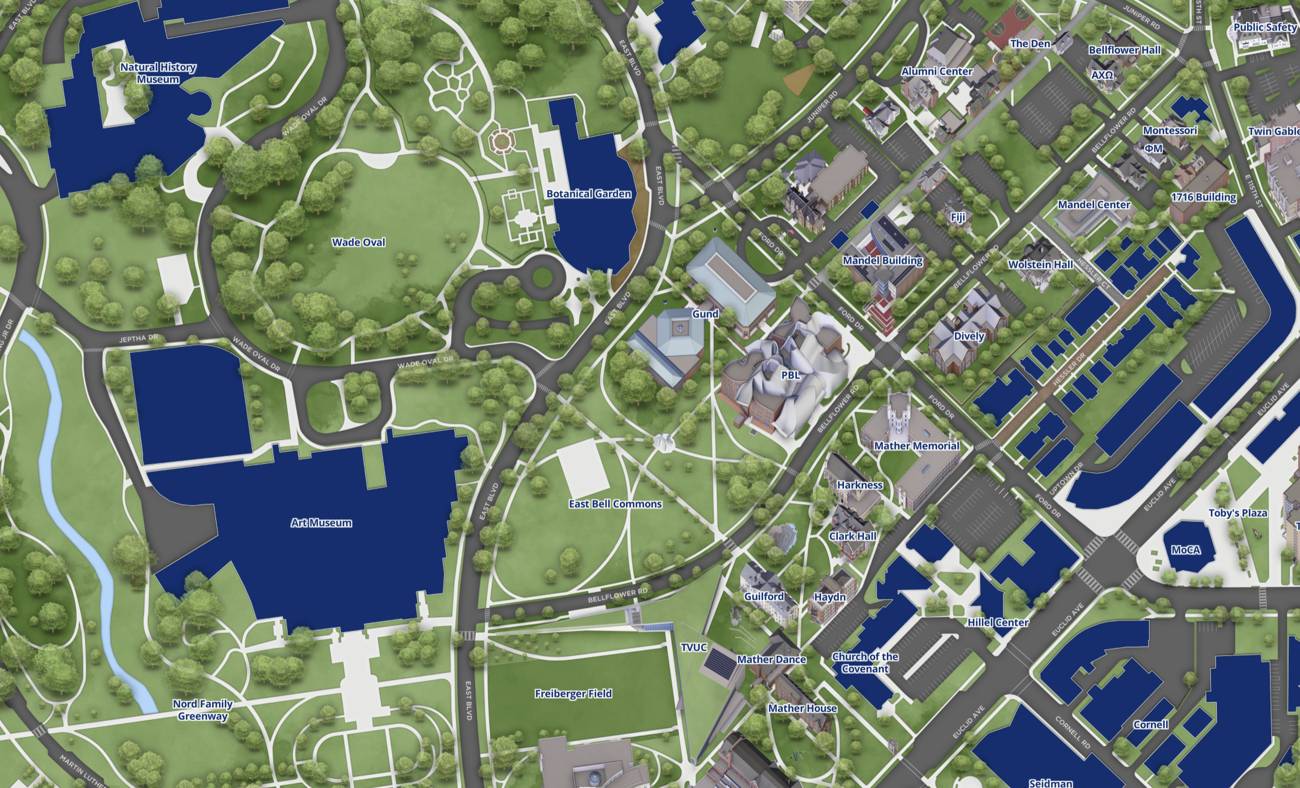
Case Western Reserve University has launched an interactive campus map designed to help students, faculty, and visitors navigate its Cleveland campus more efficiently. The tool offers turn-by-turn directions between buildings, similar to what smartphone GPS applications provide for outdoor navigation.
The map addresses a common challenge at large universities where campuses span multiple city blocks and buildings lack intuitive layout. New students and visitors often struggle to locate classrooms, libraries, and administrative offices. The interactive features reduce orientation time and help people reach destinations faster.
The university did not release detailed technical specifications about the map's development or timeline for rollout to mobile devices. Case Western Reserve, which enrolls roughly 9,000 students across undergraduate and graduate programs, serves a geographically dispersed campus in Cleveland's University Circle district.
Interactive campus maps have become standard infrastructure at major research universities. Many institutions offer versions through their websites and mobile apps, though the depth of features varies widely. Some maps include real-time building access information, classroom listings, and virtual tours. Others provide basic directional guidance only.
The launch reflects universities' broader investment in digital tools that improve the student experience. Campus navigation technology reduces friction in daily operations, particularly for first-year students during their initial weeks on campus. Efficiency gains extend beyond convenience. Better wayfinding can improve campus safety by reducing the number of lost individuals asking for directions in unfamiliar areas.
Case Western Reserve competes with other Ohio universities including Ohio State University and University of Cincinnati, both of which offer their own digital campus navigation tools. The new map positions the institution alongside peer institutions in providing modern digital infrastructure.
The university did not announce specific features beyond turn-by-turn directions or a planned date for broader feature rollouts. Typical campus map functionality includes building hours, dining locations, accessibility information, and event venue mapping. Whether Case Western Reserve's map will eventually include these additions remains unclear.