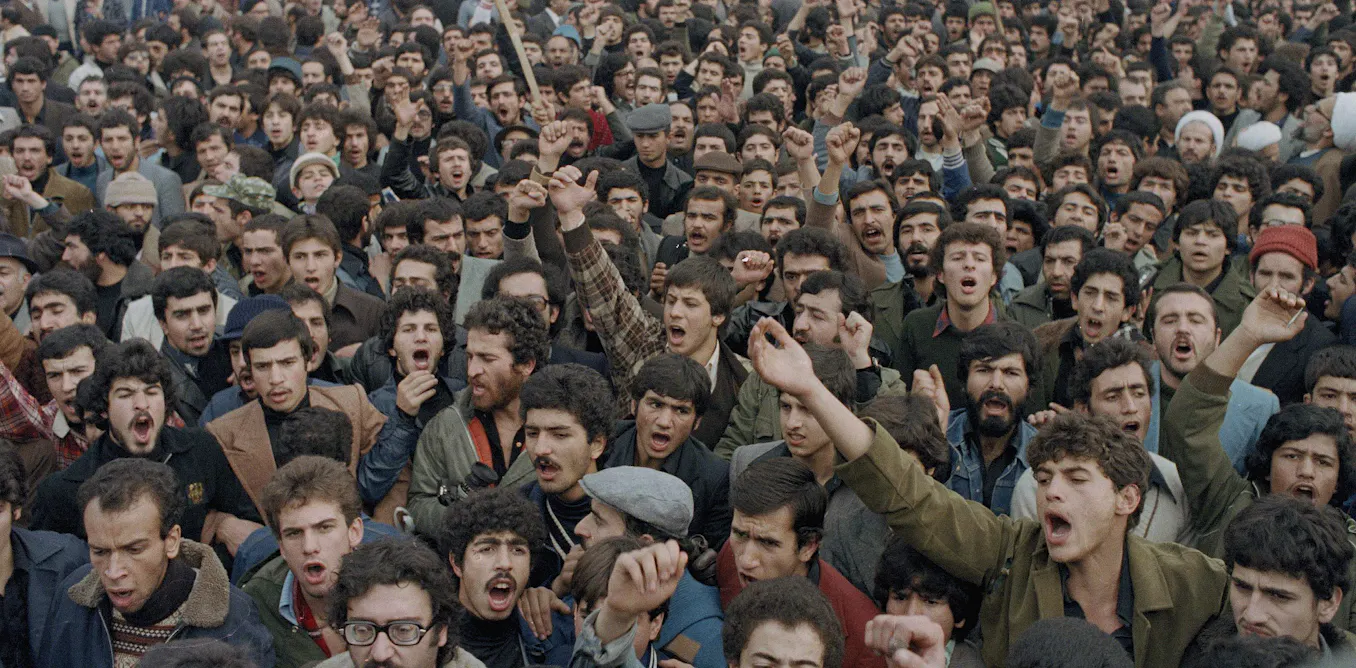
# A Novel Centering Iranian Voices Amid Revolution's Aftermath
Shida Bazyar's novel, shortlisted for the International Booker Prize, tracks five lives reshaped by Iran's Islamic Revolution through interconnected narratives that restore agency to voices often erased from historical accounts.
The book follows characters whose trajectories diverge and collide across decades of political upheaval. Each storyline reveals how systemic forces beyond individual control redirect personal ambitions, relationships, and identities. Bazyar constructs these narratives with precision, allowing readers to witness how revolution functions not as abstraction but as lived experience across different social positions.
The International Booker Prize shortlist inclusion signals the novel's literary merit and its role in expanding English-language conversations about Iran beyond news cycles and geopolitical analysis. Rather than presenting revolution as a singular event frozen in 1979, Bazyar traces its rippling effects across generations, showing how state power operates through everyday structures that shape education, work, family, and exile.
The Conversation article positions this work within a larger cultural conversation about who gets to tell stories of displacement and loss. By centering Iranian narratives, the novel counters dominant Western frameworks that often flatten Iranian experiences into political categories or reduce personal stories to footnotes in historical timelines.
For educators and students, this novel offers a bridge between historical study and literary analysis. Reading literature rooted in specific geopolitical contexts develops critical thinking about how power operates and how individuals navigate systems that constrain their choices. The shortlist recognition reflects growing publisher and reader interest in works that restore complexity to regions often oversimplified in mainstream media.
The book demonstrates how fiction can serve as historical witness, preserving details that formal histories sometimes omit. Characters' internal lives, relationships under strain, and small acts of resistance appear on equal footing with political events, creating a fuller picture