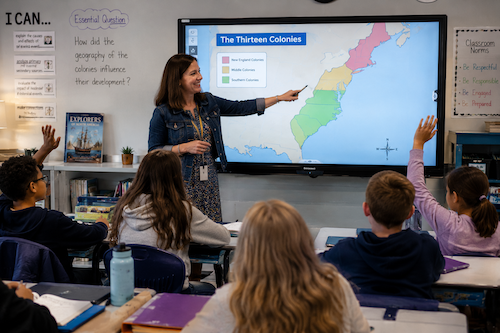
A Massachusetts fifth-grade teacher with 26 years of classroom experience argues that curiosity-driven instruction transforms how students engage with learning, particularly in social studies.
The teacher, who personally disliked social studies as a child, has spent her career building a classroom culture where students argue, wonder, and actively investigate topics rather than passively receive information. This approach positions every student as a potential researcher, encouraging them to ask questions, test ideas, and connect learning to their own lives.
Curiosity-first teaching diverges from traditional methods that prioritize content delivery and standardized benchmarks. Instead, it prioritizes student agency. When fifth graders pursue questions that genuinely interest them, they develop deeper understanding and retain information longer. The approach also builds critical thinking skills essential for academic success and civic participation.
In practice, this means creating space for student debate and investigation. Rather than reading textbook chapters, students might examine primary sources, conduct interviews, or research local history. They learn to evaluate evidence, construct arguments, and revise thinking based on new information. These are the habits of actual researchers and informed citizens.
The model reflects broader shifts in education toward student-centered learning and away from rote memorization. Research on cognitive development supports this approach. Fifth graders are developmentally ready for more complex reasoning and benefit from autonomy in learning.
However, implementing curiosity-first teaching requires time, training, and curricular flexibility. Teachers need professional development to facilitate inquiry rather than simply deliver content. Schools must allow space within accountability frameworks for this deeper, slower work.
The stakes extend beyond test scores. Students who experience curiosity-driven learning develop intrinsic motivation for learning itself. They're more likely to pursue advanced coursework, engage in civic life, and view themselves as capable of understanding complex topics. A teacher's 26-year commitment to this approach demonstrates that when educators prioritize curiosity over compliance, students become