District leaders face mounting pressure to boost science achievement, but education experts warn that meaningful science learning develops over years, not months. Schools often prioritize short-term test score gains while neglecting the foundational skills students need to succeed in STEM fields long-term.
The tension reflects a fundamental mismatch between how science actually works and how districts measure success. Students build scientific thinking through sustained exposure to inquiry, experimentation, and problem-solving across multiple grade levels. Yet accountability systems reward immediate gains on annual standardized tests, pushing leaders to focus resources on quick fixes rather than long-term competency development.
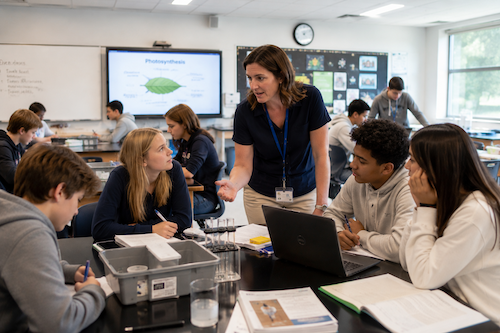
This approach creates real costs. When schools concentrate on test preparation at the expense of hands-on lab work, collaborative projects, and deep exploration of concepts, students miss opportunities to develop genuine scientific reasoning. They may perform well on a single year's assessment but lack the cumulative knowledge needed for advanced coursework in high school or college.
The staffing challenge compounds the problem. Many districts struggle to hire and retain qualified science teachers, particularly in high-poverty areas. Leaders must decide between spreading limited resources thin across grades K-12 or concentrating them strategically. Without sustained investment, one-time improvements in student scores typically fade.
Research on science learning trajectories shows that achievement builds incrementally. Third-grade students who understand basic physical properties and energy concepts perform better on middle school physics. Middle schoolers with strong grasp of cell biology and ecosystems enter high school equipped for chemistry and environmental science. Breaking this chain at any point weakens students' future potential.
Effective district strategies require reframing what science achievement means. Instead of narrowing focus to tested grades and topics, leaders should invest in comprehensive K-12 science programs with qualified teachers, modern materials, and time for authentic scientific practice. Short-term test scores may not rise as steeply, but students develop the conceptual understanding and analytical skills that define real