# What Is Cognitive Dissonance?
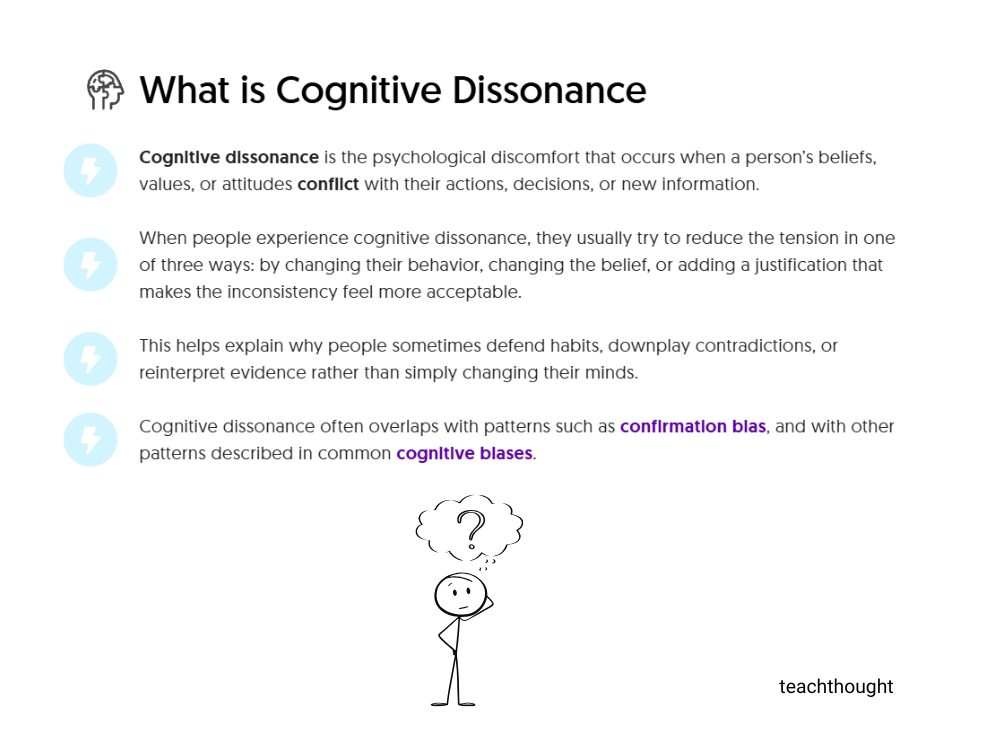
Cognitive dissonance describes the mental discomfort people experience when holding contradictory beliefs, values, or attitudes simultaneously. The concept, rooted in social psychology research, explains why individuals feel tension when their actions clash with their stated principles or when exposed to information that conflicts with existing worldviews.
In classroom settings, cognitive dissonance plays a direct role in learning. Students encounter it when new material challenges prior understanding. A history student might experience dissonance learning that a historical figure they admired committed morally questionable acts. A science student faces it when experimental results contradict textbook predictions. Teachers who understand this concept can design lessons that productively activate dissonance, motivating students to revise thinking and deepen understanding.
Educators use cognitive dissonance strategically. Presenting conflicting perspectives, posing thought-provoking questions, and creating scenarios where prior knowledge proves incomplete can prompt students to reconcile contradictions. This discomfort, when managed well, drives cognitive growth. However, excessive or poorly handled dissonance can frustrate learners and trigger defensive reactions where students simply reject new information rather than integrate it.
The concept extends beyond content mastery. Students often experience dissonance between their self-image and academic performance, between peer pressure and personal values, or between career aspirations and current achievement levels. Helping students recognize and work through dissonance builds metacognitive skills and resilience.
TeachThought and other education platforms emphasize cognitive dissonance as a teaching tool. Professional development programs increasingly train teachers to recognize when students experience this tension and to facilitate productive resolution rather than allowing students to retreat into rigid thinking. The goal remains consistent: using the discomfort of contradiction as leverage for genuine intellectual development.