# The Hidden Curriculum Gap
Most high school seniors lack readiness for life after graduation, according to a post-graduation readiness report from YouScience. The data reveals a gap between what schools teach and what students need to succeed in their first steps beyond the classroom.
The report does not specify the exact percentage of unprepared students, but the finding underscores a systemic problem. Students leave high school without foundational skills for decision-making, career planning, and practical next-step navigation. This gap affects college enrollment, workforce entry, and early career stability.
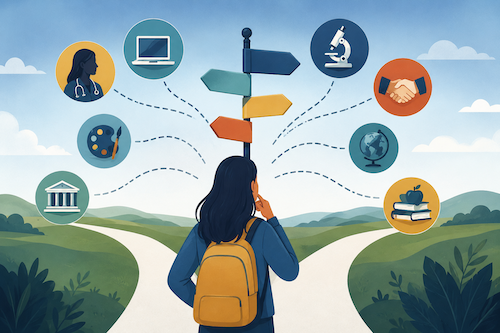
Career and Technical Education (CTE) programs offer one potential solution. When aligned with decision education—teaching students how to evaluate options, weigh consequences, and make informed choices—CTE can bridge the readiness gap. Decision education goes beyond job training. It teaches metacognitive skills applicable to college selection, major choice, financial planning, and long-term career development.
The alignment works because it addresses both immediate and lifelong needs. A student in a welding CTE program learns technical skills, but decision education helps that student understand why welding fits their strengths, how it aligns with their values, and what career pathways exist. The same student can then apply those decision-making frameworks to future transitions.
Schools currently house these elements separately. CTE programs focus on technical competency. Academic classes emphasize content knowledge. Neither typically teaches decision-making as a core curriculum component. YouScience's findings suggest this fragmentation leaves gaps.
Implementation requires intentional curriculum design. Educators must embed decision education across CTE pathways, not treat it as an add-on. Teachers need professional development to integrate these frameworks. Schools must assess whether graduates can actually make informed decisions about their futures.
The stakes are high. Students who leave high school unprepared face higher rates of college dropout, job dissatisfaction, and delayed economic independence.